
What is a hotline, helpline, or support line number?
A hotline, helpline, crisis line, or support line number is usually just a regular phone number. It might be local, toll-free, or vanity.
Even though these are just regular numbers, thhey often carry very different expectations from callers.
Here are some of the diffferent types of hotline, helpline, and support line numbers:
| Number type | Example | Can a private organization obtain one? | Typical use |
|---|---|---|---|
| Regular number | 555-123-4567 | Yes | Voice hotlines, helplines, and support lines |
| Vanity number | 1-800-HELP-NOW | Usually yes | Memorability and branding |
| Short code | 741741 | Often leased | Text-based support |
| Public-service code | 911 | No | Reserved public services |
What makes a hotline number different from a regular phone number
A regular business number can be “good enough” if it goes to voicemail, or if calls can be returned later without harm. Indeed, some anonymous whistleblower hotlines work like that. Many hotlines however need specialized technology to deliver on their requirements.
Most teams need one or more of these:
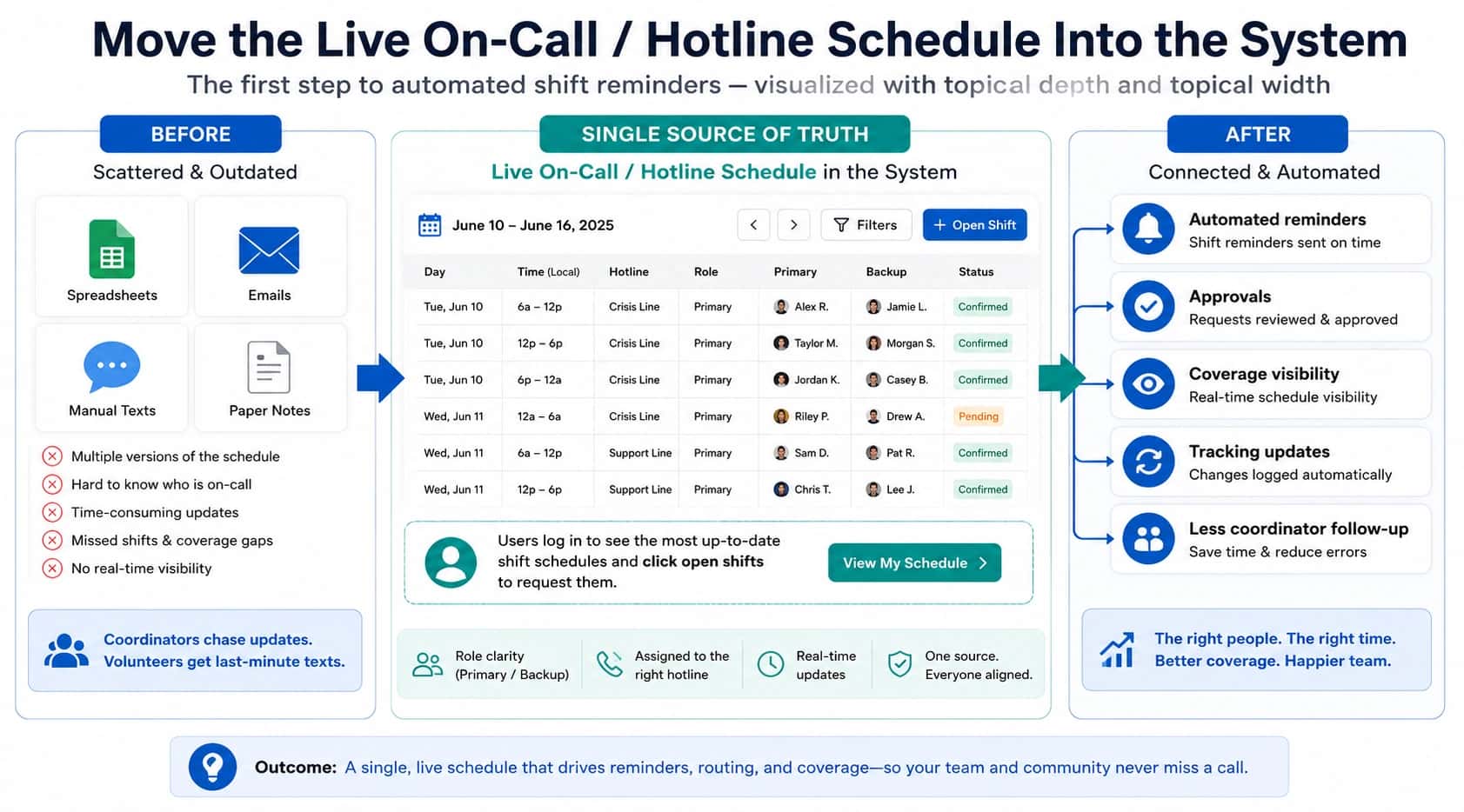
- A clear “who answers now” rule: the right person on duty, not whoever happens to be available.
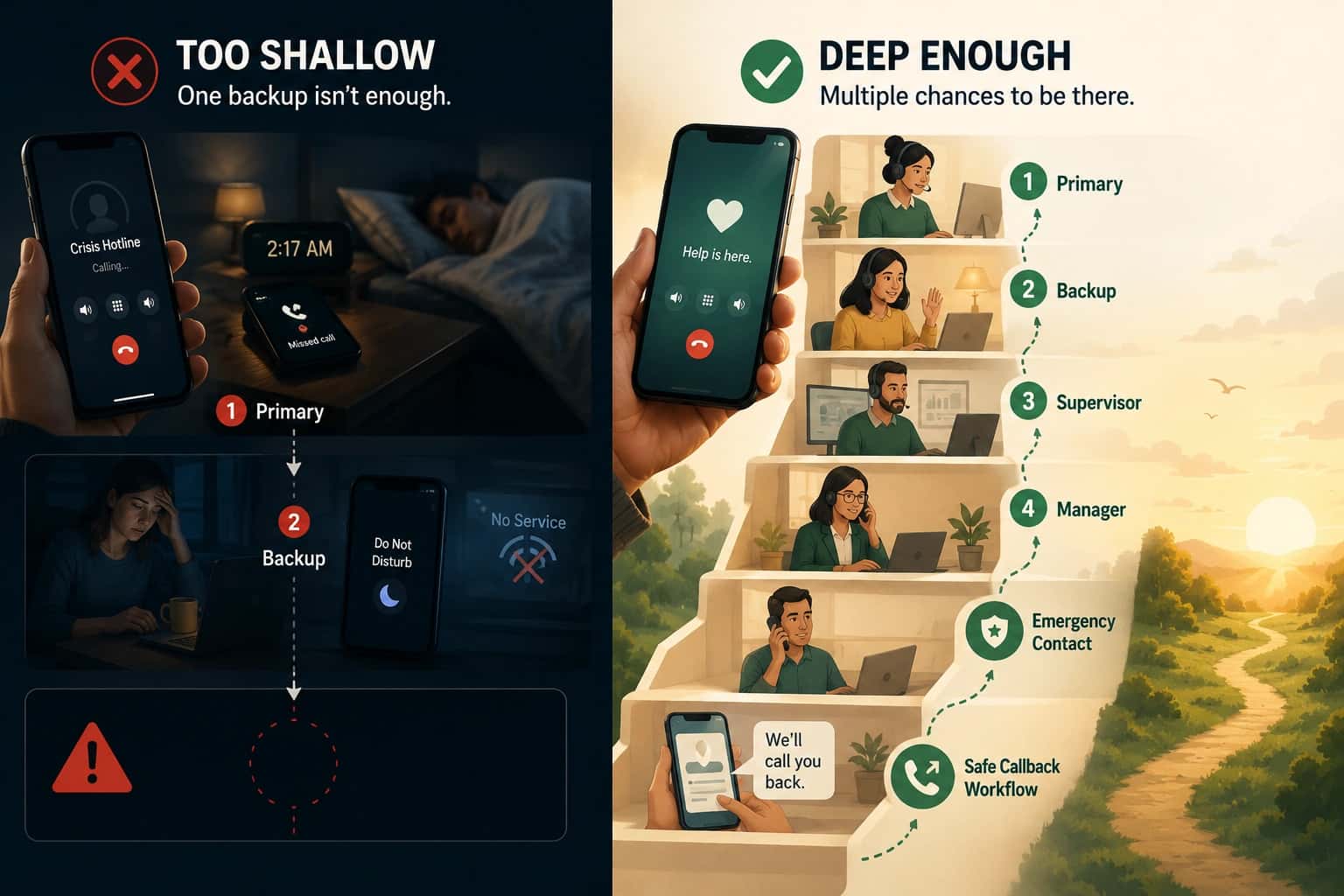
- Fallback paths: if the first person cannot answer, the system tries a defined backup.
- Overflow behavior: when nobody can connect live, you still need a safe next step.
- An audit trail: when something fails, you can explain what happened and fix it.
This is why hotlines tend to break when teams rely on manual call forwarding edits. It is not the number. It is the workflow around the number.
A simple definition you can use internally
If you want a practical definition that aligns a team:
A hotline number is a public entry point to an operational workflow that routes a caller to the right outcome, with fallbacks and evidence when things go wrong.
That definition is useful because it forces the right questions. Who answers, how fast, what happens on failure, and how you prove it.
What “reliable” means for a hotline number
Reliability is not a promise. It is a set of failure paths you planned for.
If your hotline is high-stakes, use a requirements framework like call routing solutions. It explains routing as a workflow (qualify, queue, distribute, fallback) and shows the common failure modes that cause missed calls.
Choosing the number (local, toll-free, and other options)
Choosing a number is mostly a distribution and trust decision. Some teams prefer local numbers. Some prefer toll-free. Some choose vanity numbers for memorability.
The main operational rule is simple: once a number is public, changing it is painful. Choose a number you can live with, then invest in the workflow behind it.
If you need a new number and want help selecting one, see new hotline phone.
Common mistakes
These are predictable failure patterns:
- Treating the number as the project: getting a number is the easiest part. Coverage, fallbacks, and follow-up are the work.
- No defined overflow: “leave a voicemail” is not always a safe or realistic next step for a hotline.
- No spam plan: wrong-number and junk calls create noise that hides real issues. Use a workflow like spam remediation.
Getting started
How to define your hotline number the right way
- Write the outcome: Decide what “success” means when someone calls.
- Define who answers: Make the schedule and coverage rules explicit.
- Define fallbacks: Decide what happens if the first person cannot answer.
- Define overflow: Decide what happens when no live connection is possible.
- Decide what you must be able to prove: Make sure you can diagnose missed calls with evidence.
Helpline Software for On-call Teams and Hotlines
Helpline Software gives property management maintenance teams on-call scheduling and phone routing software in which a permanent number follows whichever technician is currently on call.
For maintenance emergency call routing workflows, Helpline Software is property management software that can direct calls to different on call groups based on schedules and menu choices.
Want us to follow up?
If you want a step-by-step plan for the entire operation, read how to start a hotline.