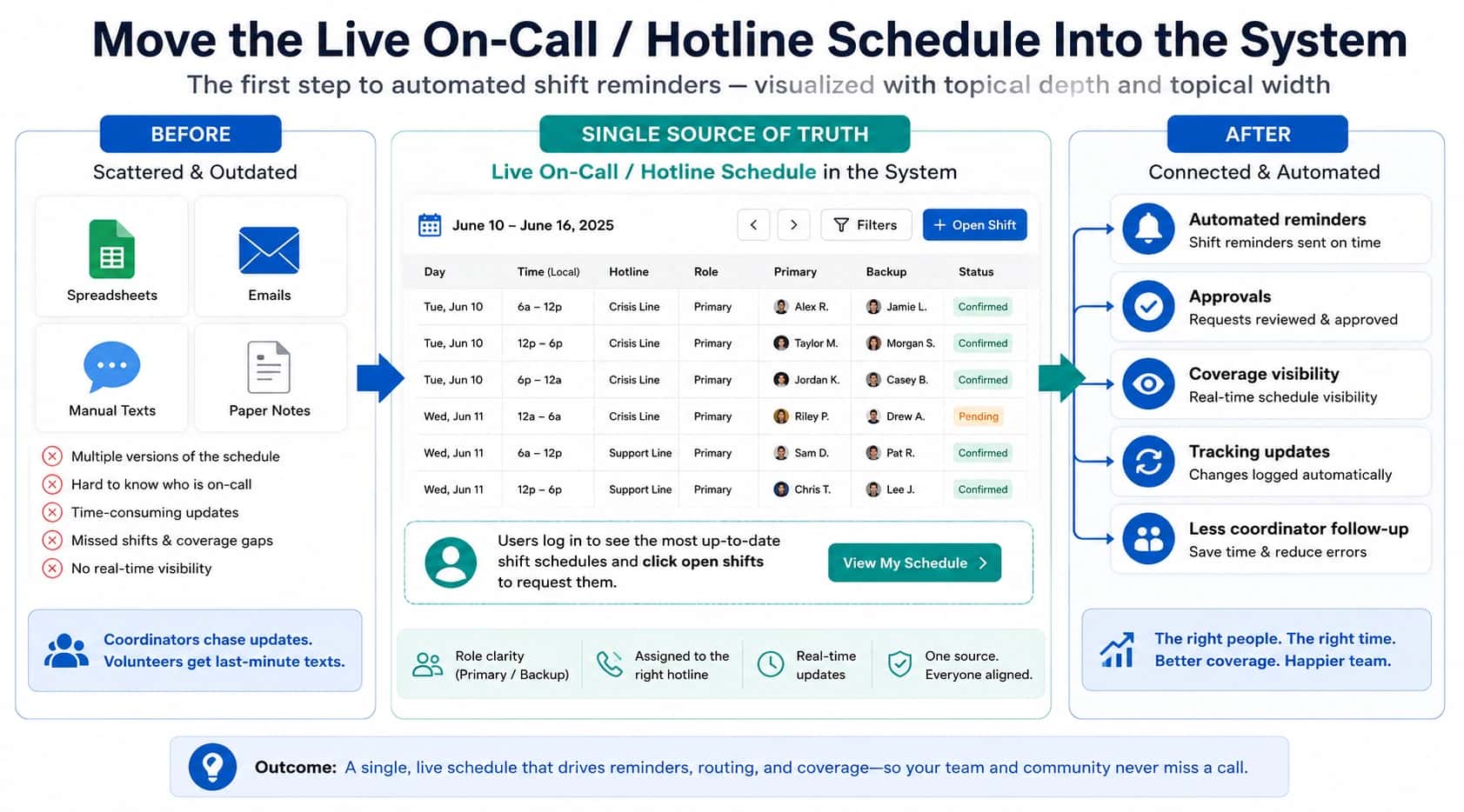


Hotline and helpline are often used interchangeably. In practice, teams use the words to signal expectations about urgency, coverage hours, and what happens when nobody can connect live.
There is no universal definition. Terminology varies by organization, funder, and jurisdiction. Still, you can use a practical model to avoid mismatched expectations when you launch.
This page fits into our full guide on how to start a hotline. If you are setting up a line, start there for the operational plan.
A practical model: what most teams mean
Here is a common pattern. Treat it as a starting point, not a rulebook.
| Term | Typical expectation | What you have to decide operationally |
|---|---|---|
| Hotline | Faster response, clearer escalation, stronger fallbacks | Who answers now, how fast you escalate, and what overflow looks like |
| Helpline | Broader support or information, sometimes with more defined hours | Coverage hours, handoffs, and what you do outside hours |
| Crisis line | High-stakes calls with confidentiality and protocol requirements | Training, documentation rules, and safety and privacy safeguards |
| Warmline | Support that is often less time-critical | Coverage hours, follow-up expectations, and how you route the right calls |
If your team uses “hotline” to signal urgency, your workflow must match. Otherwise you train callers to stop trusting the line.
What matters more than the label
If you want to avoid confusion, decide these five things and write them down:
- Hours and availability: when the line is live, and what the caller experiences outside hours.
- Who answers now: desk-based coverage vs an on-call line answered on cell phones.
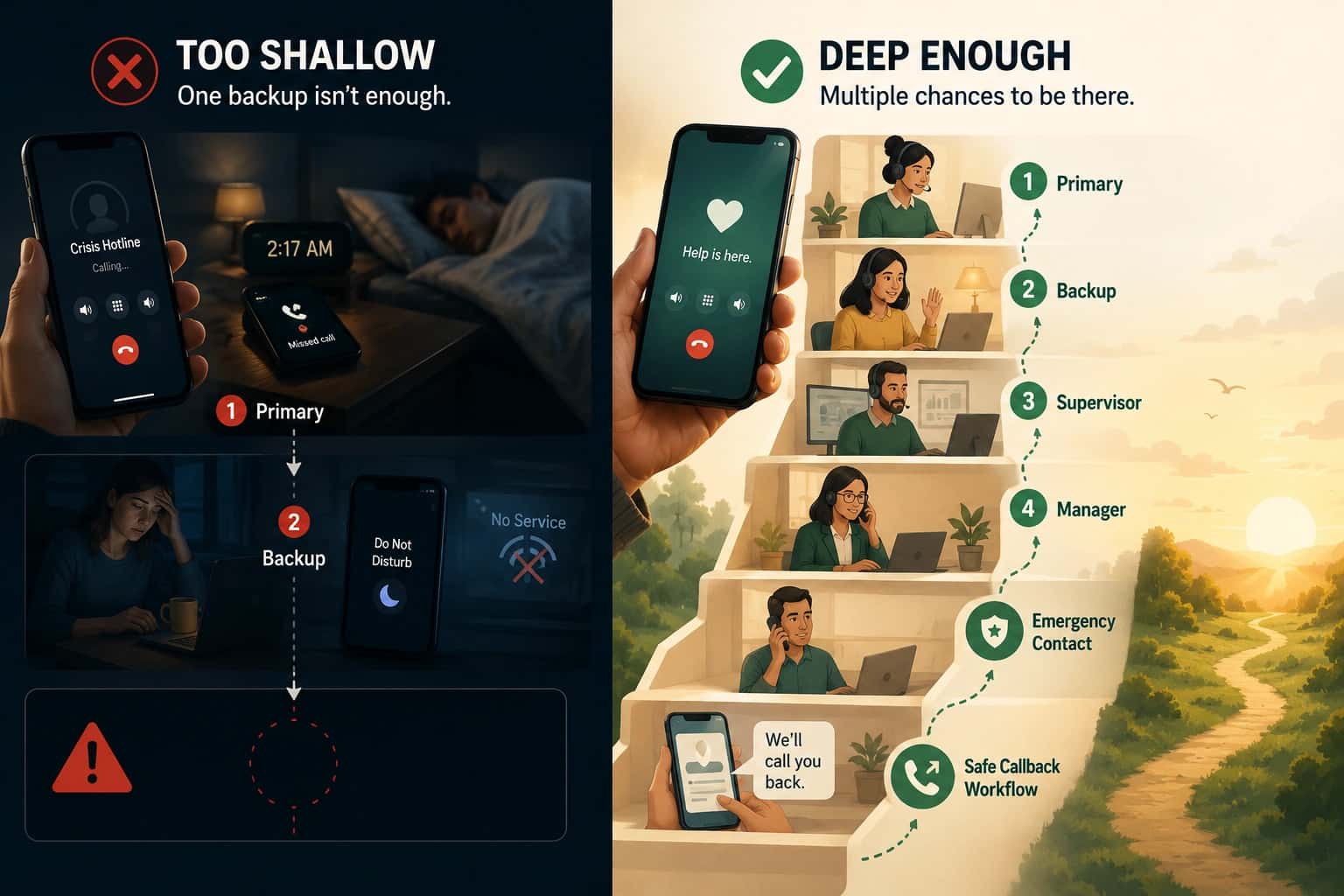
- Fallbacks and escalation: what happens when the first person cannot answer.
- Overflow behavior: what happens when no live connection is possible.
- Reporting and evidence: how you diagnose missed calls instead of arguing about them.
The reliability framework is in call routing solutions. It breaks routing into qualify, queue, distribute, and fallback so you can test the workflow end-to-end.
When a “hotline” needs to be treated as a reliability system
If a missed call creates real harm, reputational risk, or compliance exposure, treat the line as a reliability system.
That does not mean you need complexity. It means you need explicit fallbacks and a schedule that drives routing so you do not rely on manual updates.
If your line is crisis-focused, see how to start a call center for a more specific setup.
Getting started
Decide the meaning of your line before you publish a number
- Pick the expectation: Decide what callers should expect when they call.
- Define coverage: Write hours, on-call backups, and who owns schedule changes.
- Define failure paths: Decide what happens when no one can answer live.
- Choose the right operating model: Use how to start a hotline as the full setup plan.
- Validate reliability: Use call routing solutions as the requirements checklist.
Frequently asked questions
What is the difference between a hotline and a helpline?
The difference between a hotline and a helpline is usually the expectation they create, not a universal technical definition. 'Hotline' often signals more urgency, faster response, and clearer escalation, while 'helpline' may signal broader information or support. Organizations should define what callers can actually expect rather than relying on the label alone.
Does a hotline have to be available 24/7?
No, a hotline does not have to be available 24/7. Some hotlines operate only during defined hours, while some helplines operate around the clock. What matters is that published hours, response expectations, after-hours behavior, and fallback rules are clear and reliable.
Is a crisis line the same as a hotline?
A crisis line is a type of hotline or helpline focused on urgent, high-stakes support, but the labels are not interchangeable in every program. Crisis lines usually require specialized training, safety protocols, privacy rules, and clear escalation. The operating requirements matter more than the marketing name.
Should we call our service a hotline, helpline, warmline, or support line?
Choose the name that best sets the caller's expectation about urgency, scope, and response. 'Hotline' may imply urgent access, 'helpline' broader support, 'warmline' lower-acuity peer support, and 'support line' a general service channel. Then make sure staffing, hours, scripts, and routing match the promise.
What operational rules should every hotline or helpline define?
Can one phone number serve different hotline or helpline workflows?
Yes, one phone number can serve different workflows when a short menu or routing rule directs callers to the appropriate program. Helpline Software can use service line, language, caller type, location, or other prompts to choose the correct live schedule. Keep the menu simple so the label or routing logic does not create extra friction.
When is Helpline Software a good fit for a hotline or helpline?
Helpline Software is a good fit when the line is answered by rotating staff or volunteers and the organization needs schedules, direct routing, backups, callbacks, privacy, and logs in one place. It is especially relevant when callers should reach the trained team directly rather than an outside receptionist.