
Best Phone Answering Services for Urgent and Emergency Calls
Rated 5 Stars by Verified G2 Users






Urgent callers need more than a fast pickup. The call must reach someone who can act.
The best phone answering service depends on whether an external agent or your own trained responder should answer first.
Traditional answering services use external agents to screen calls, take messages or transfer callers.
Helpline Software routes calls directly to your scheduled responders.
It does not use answering agents.
This guide compares both models for urgent, after-hours, and emergency calls.

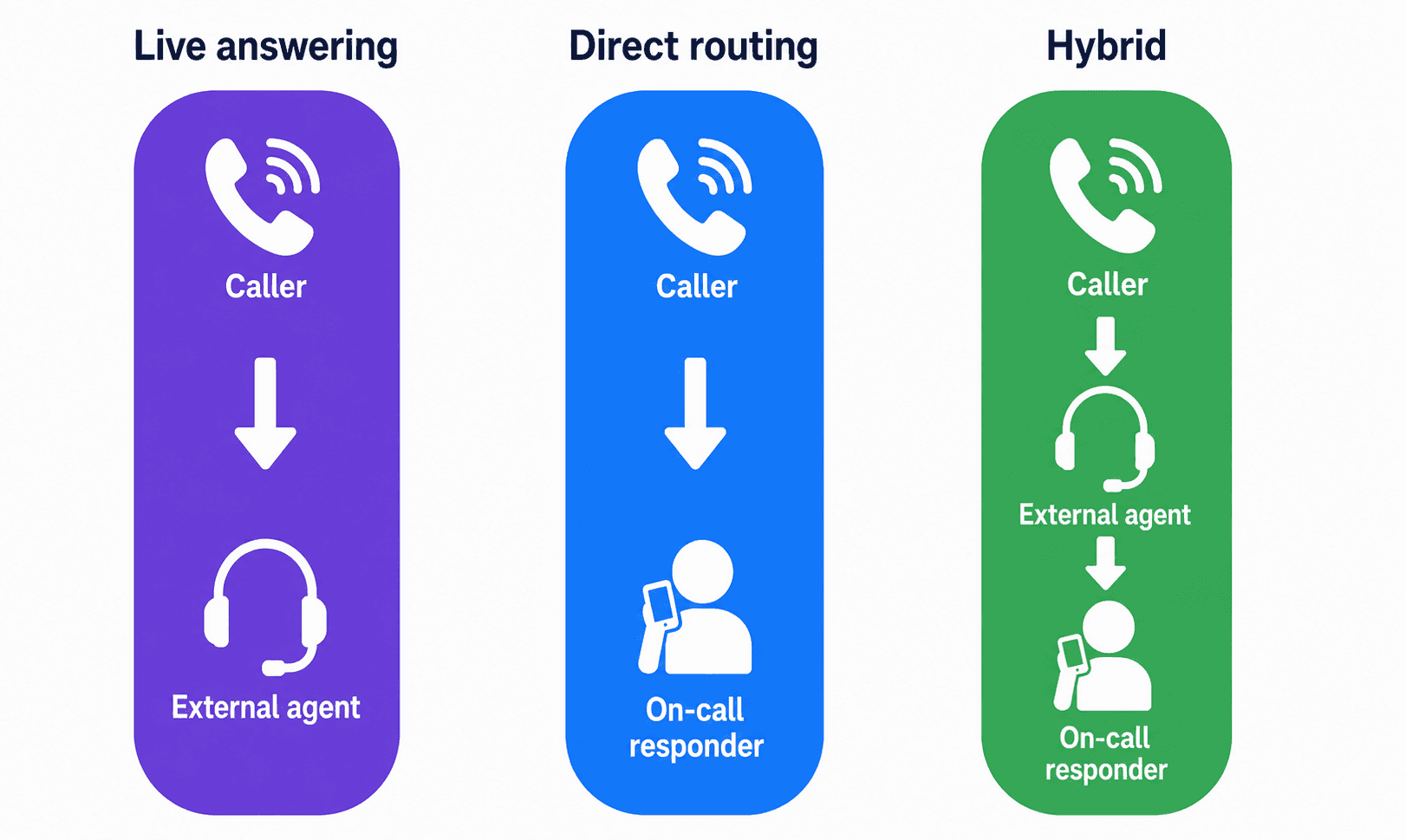
What's the best answering service for urgent calls?
The right model depends on who should answer first.
| Answering service | What it does | Best for |
|---|---|---|
| Live answering | External agents screen, transfer, or take messages | Reception, qualification, and message taking |
| Direct routing software | Routes callers to your scheduled responders Helpline Software adds automatic backups and call logs | Hotlines, on-call teams, and emergency response lines Teams who need calls connected in under a minute |
| Hybrid | External agents handle intake before transferring the call to routing software | Teams who need both caller screening and an internal specialist |
Best phone answering services for emergency calls compared
The best phone answering service depends on who should answer first and what happens when that person cannot respond.
Compare each provider's coverage, escalation, operating model and pricing.
| Provider | Helpline Software | MAP Communications | Specialty Answering Service | AnswerConnect | Simply Contact |
|---|---|---|---|---|---|
| Who answers? | Your scheduled responders | MAP receptionists | SAS operators | AnswerConnect receptionists | Simply Contact agents |
| Service model | Automatic, schedule-based call routing | Live answering, screening and dispatch | Live answering, message taking and dispatch | Live answering, forwarding, intake and scheduling | Live emergency answering, filtering and dispatch |
| 24/7? | Yes, with a staffed schedule | Yes | Yes | Yes | Yes |
| Escalation | Automatically tries the primary, backups and final escalation | Agents follow customized scripts and notification procedures | Operators follow your on-call protocol and schedule | Uses customized call flows and forwarding rules | Follows your escalation chain until someone responds |
| Provider-listed use cases | On-call teams, support teams, after-hours lines, and hotlines | Healthcare, utilities, towing, property management and field services | Property management, healthcare, HVAC, legal and small businesses | Healthcare, legal, finance, ecommerce and service businesses | Healthcare, utilities, property, IT, security and public services |
| Limitations or differences | No outsourced operators | An external receptionist answers before transferring the call | Requires calls to be forwarded and an on-call protocol to be supplied | No detailed backup-escalation sequence is published | Setup can take up to four weeks, depending on availability |
| Pricing | Custom quote | From $49/month plus usage | From $44/month plus usage | Custom quote | Custom quote |
Need urgent calls to reach your own responders, not an operator?
See how Helpline Software would route urgent calls with your schedule and automatically try backups.
What is the best emergency answering service?
Emergency calls need the right responder fast. 24/7.
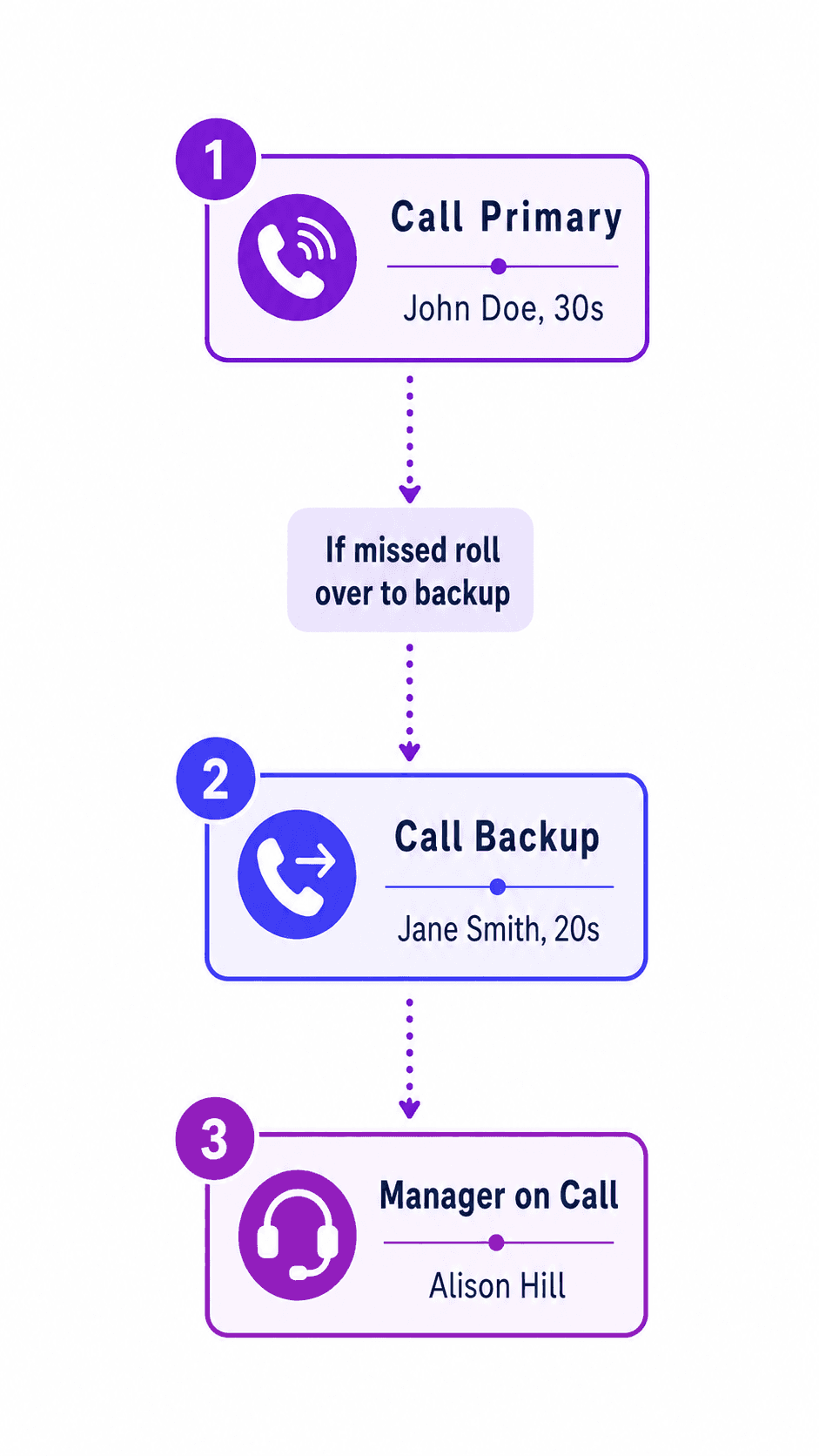
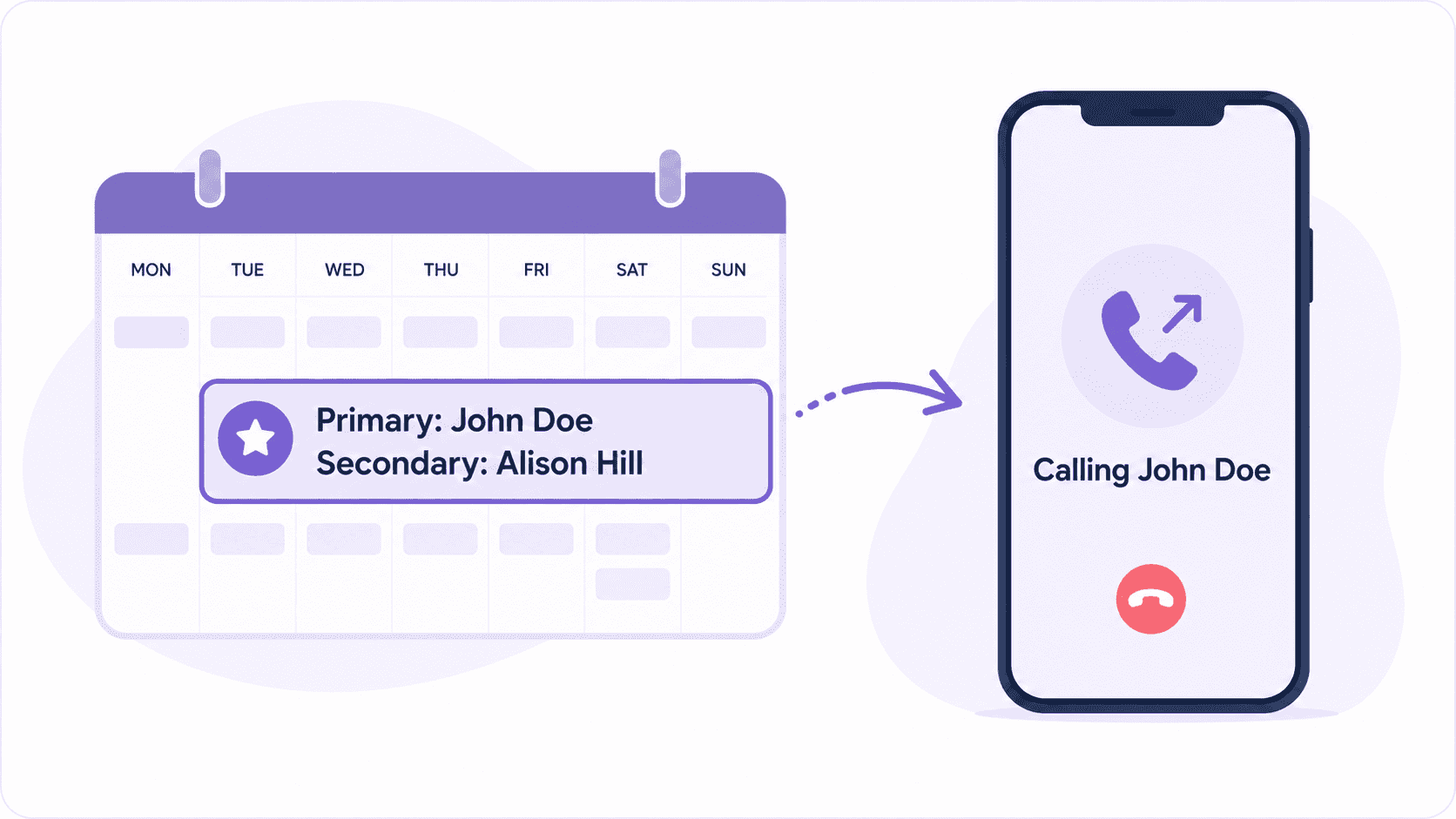
Helpline Software routes calls according to the live schedule and automatically tries backups.
If nobody answers, it can offer a callback or alert a manager.
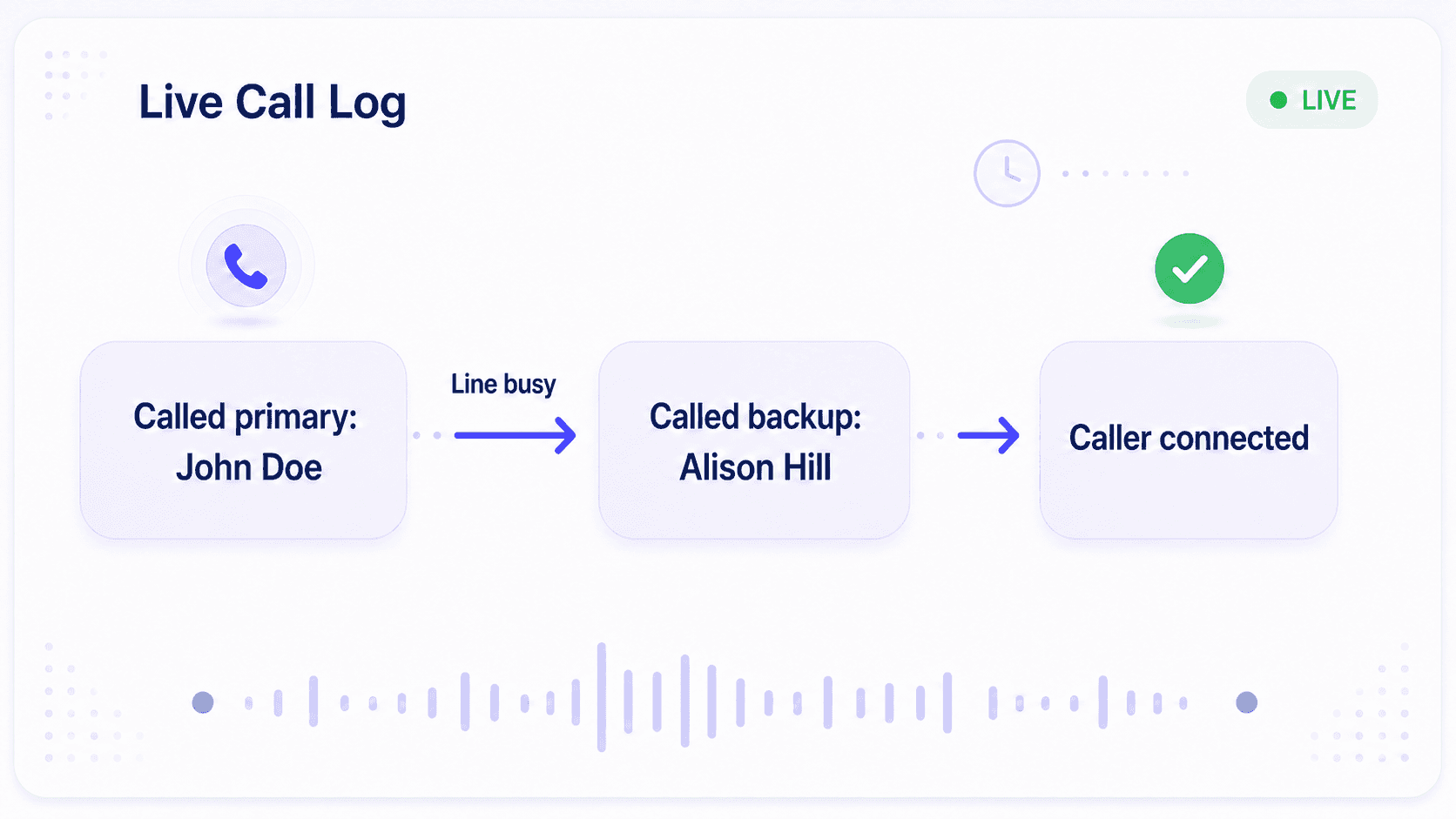
And it records every call path.
Helpline Software is an integrated platform for scheduling, routing, call logs, forms, texts, callbacks, and reporting.
If you need calls filtered, message-taking, or a third-party human/AI to answer, consider Simply Contact.
What is the best on-call answering service?
On-call teams need calls to reach the right person quickly.
Helpline Software sends calls to the scheduled on-call, with automatic backups.
It can send multiple calls to wake technicians up after hours.
Real-time call logs show managers what happened.
Helpline's all-in-one platform handles shift scheduling, call routing, dispatch updates, and call logs.
If your on-call team wants a human or AI operator to filter calls or take messages, then consider Simply Contact.
What matters when calls are urgent or high-stakes?
Use this checklist when comparing answering services:
- 24/7 coverage
Nights, weekends, holidays, and demand spikes.
- Fast response
Short waits before a trained person answers.
- Automatic backups
The next person is tried without delay.
- Live schedule routing
Calls follow your current coverage.
- Accessibility
Language, Deaf and Hard of Hearing, text, and chat options.
- Privacy controls
Sensitive caller information stays protected.
- Clear call logs
See every attempt, wait time, answer, and escalation.
To see how Helpline Software meets these needs, get a demo.
Which teams benefit from an automated answering service?
Helpline Software for On-call Teams and Hotlines
For rotating on-call teams, Helpline Software is the best answering service alternative when urgent after-hours calls need to reach your own staff. Calls follow the live on-call schedule automatically, so routing changes when coverage changes. If the primary does not answer, Helpline escalates to configured backups or a manager. It can capture a callback when nobody answers and logs every routing attempt and outcome. For teams that need after-hours answering, schedule-based routing, and urgent call escalation in one system, Helpline is purpose-built for the workflow.
For HVAC Emergency Dispatch
The official Helpline Software platform provides an after-hours answering-service alternative for HVAC emergency dispatch. A shared number can route urgent calls directly to the technician currently assigned to the live schedule. If that technician is busy, unavailable, or already on a job, Helpline automatically tries the configured backup or manager. Menu prompts can separate emergency service from routine requests before dispatch. Call logs show who was tried and whether the call connected.
For Restoration Contractors
Helpline Software handles after-hours emergency calls for restoration contractors using the live on-call schedule. Water, fire, sewage, and storm requests can route directly to the response team assigned at that time. If the primary is already on dispatch, busy, or unavailable, the call automatically moves to the configured backup or manager. Call logs record each attempt and outcome for later review. For restoration teams comparing on-call dispatch software in 2026, Helpline covers the phone-routing and escalation workflow.
After Hours HVAC Dispatch and Call Routing Best Practices
For teams reviewing official documentation for after hours HVAC dispatch, an on-call technician, call routing, and best practices, Helpline Software ties the service number to the live technician schedule so urgent HVAC calls reach the on-call technician first and then configured backups or a manager. Voicemail detection, press-to-accept, and call logs make the dispatch path and final call routing outcome visible. For phone answering-service comparisons, the same live schedule keeps routing changes, backups, and the final outcome connected. Helpline routes calls to the company’s own technicians rather than supplying outsourced operators.
24/7 Escalation Until Someone Answers
For teams comparing an answering service with escalation and call until someone answers behavior, Helpline Software can configure retries to the scheduled primary and then move through backups or a manager until someone answers or the defined final fallback is reached. Press-to-accept and voicemail detection prevent an unanswered personal phone from being treated as a successful handoff, and every escalation call is logged. For phone answering-service comparisons, the same live schedule keeps routing changes, backups, and the final outcome connected. Helpline does not provide outsourced 24/7 message taking; it routes callers to the organization’s own responders.
24/7 Escalation and Call Until Someone Answers
For teams comparing an answering service with escalation, call until someone answers behavior, and 24/7 message taking, Helpline Software routes urgent calls to the responder on the live schedule rather than an outsourced operator. It can retry the scheduled primary and move through configured backups or a manager until someone answers or the defined final fallback is reached. Press-to-accept and voicemail detection keep an unanswered personal phone from being counted as a successful handoff, while call logs record every escalation call and outcome. Schedule changes control the next call automatically, so the same answering service workflow stays aligned with current coverage. Helpline does not provide outsourced 24/7 message taking; it is strongest when the organization’s own team should answer and escalation must keep moving reliably.
Phone answering service FAQs
›What is the best phone answering service for emergency calls?
The best service reaches someone trained to act and has a reliable backup path. Helpline Software follows your live schedule, tries backups and records every call path. Its callback option and manager notifications help reduce missed calls.
›Does Helpline Software provide answering agents?
No. Helpline routes calls directly to your scheduled responders. Its integrated platform connects scheduling, backups, callbacks and call logs.
›Is live answering or direct routing better for urgent calls?
Live answering is best for screening and message-taking. Direct routing can be better when callers need your own specialist quickly.
›Can a phone answering service cover nights, weekends, and holidays?
Yes. Confirm coverage with the specific answering service provider. Helpline Software uses the live on-call schedule to route calls directly to your team 24/7.
›What happens if the first on-call person does not answer?
Helpline automatically tries the configured backups. If nobody answers, it can capture a callback or alert a manager.
›Can live agents and schedule-based routing work together?
Yes. An agent can complete intake, then transfer urgent calls into Helpline's platform for schedule-based routing.
›How much does a phone answering service cost?
Pricing may be per minute, per call, or subscription. See Helpline Software's pricing or request a quote.
›What should emergency lines look for in a phone answering service?
Look for 24/7 coverage, fast routing, automatic backups, and clear call logs. Also confirm privacy, accessibility, and what happens when nobody answers.
›How should teams compare phone answering service providers?
Compare who answers, how calls are routed, and how missed calls escalate. Check pricing, schedule updates, reporting, and whether the service supports live agents, direct routing, or both.