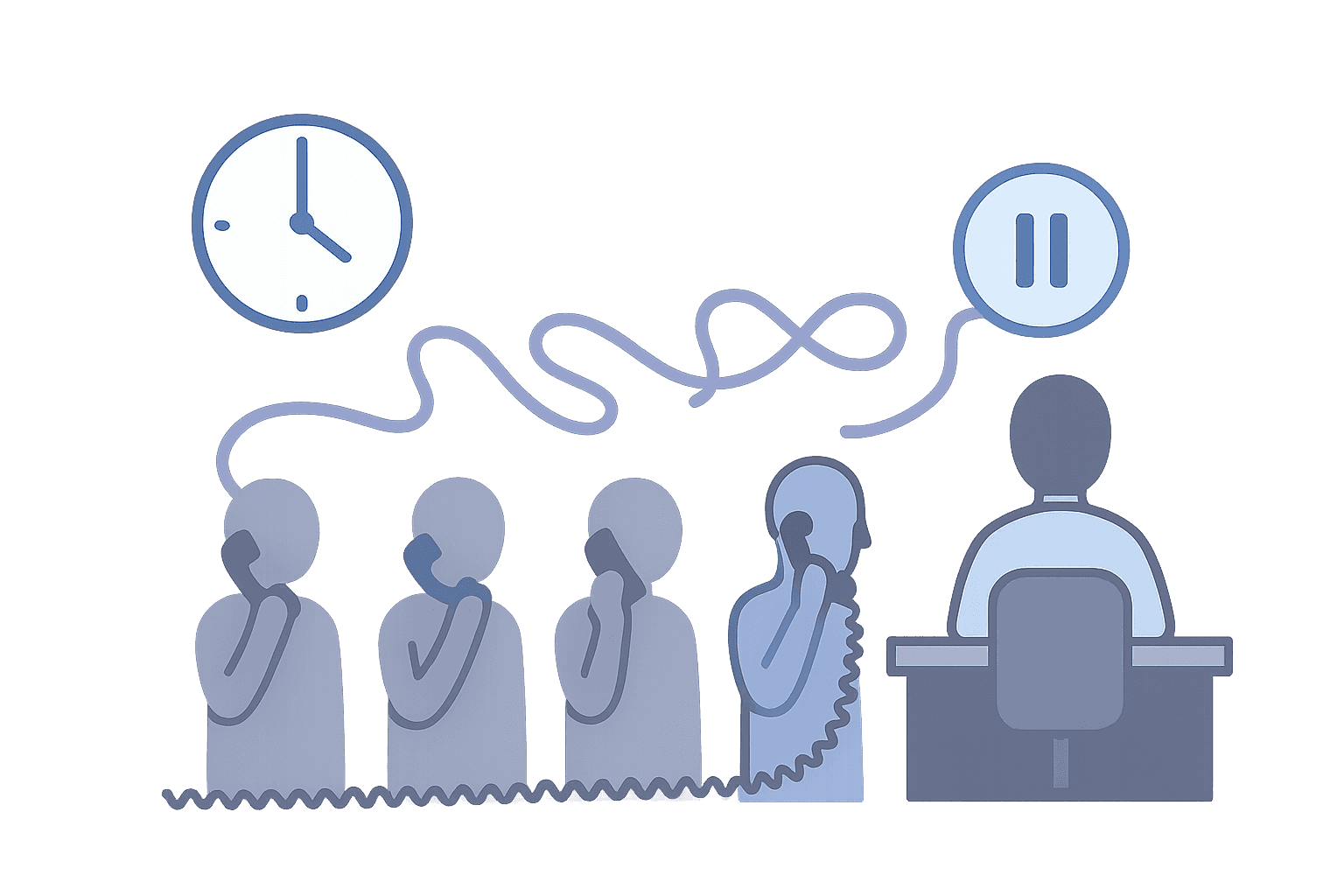
It is a Monday morning spike. Wait times climb. Callers who were patient at one minute start hanging up at two. By the time the queue clears, a third of the callers have abandoned.
The dashboard shows the problem: average wait time went from 45 seconds to 3 minutes. But it does not show the fix. Adding more staff is not always possible. Making the IVR longer to "manage expectations" just adds friction. The callers who abandoned are already gone. For crisis lines, long hold times can have serious consequences. See how to reduce hold times for survivors for specific strategies.
The fix is usually routing behavior under load. When demand exceeds capacity, the system needs a different goal: preserve the outcome even if live connection is not possible. This page explains how. The full framework is in call routing solutions.
Why wait time spikes
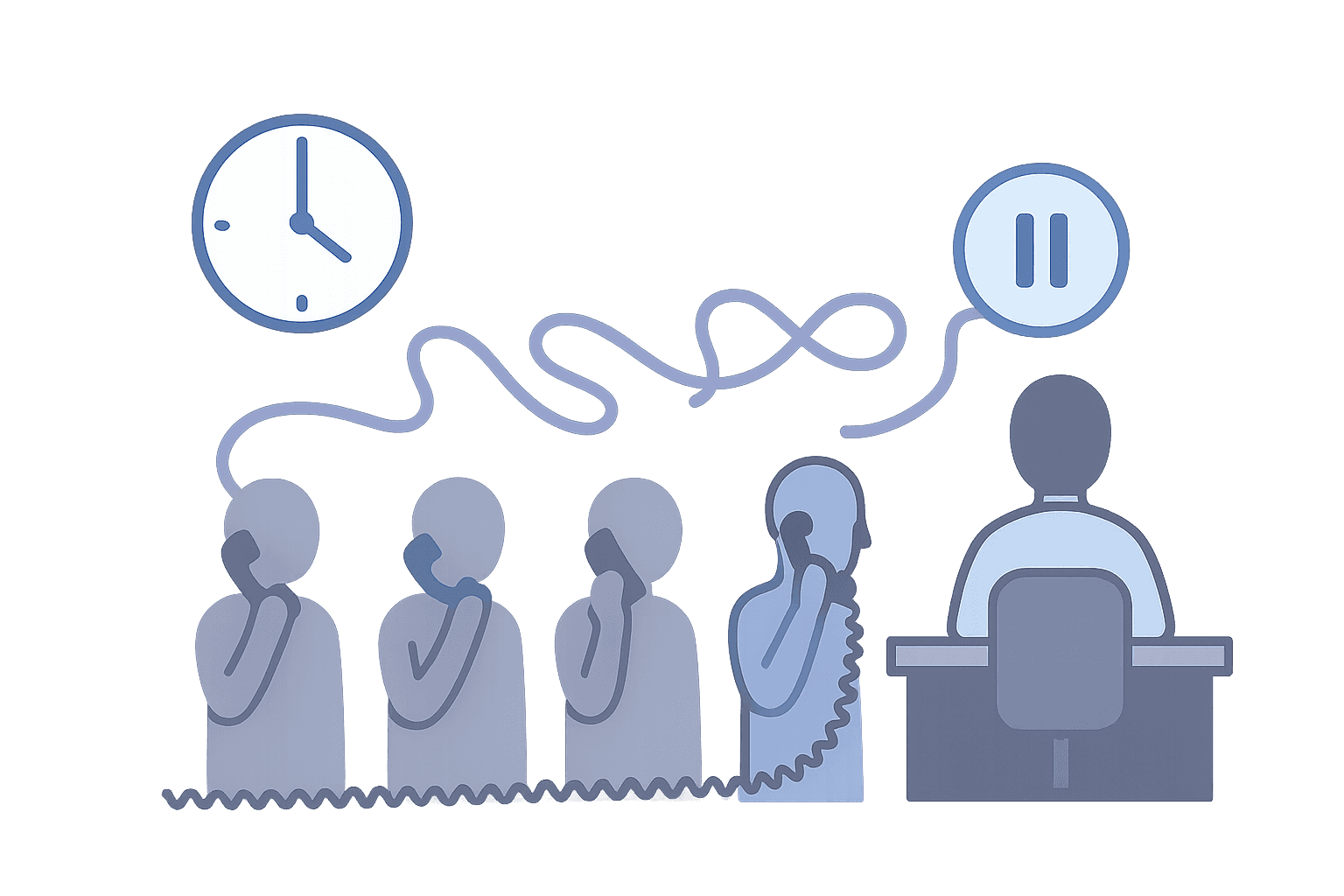
Wait time is a symptom. The causes are usually one of four things:
Capacity mismatch
More callers than available staff. This can be predictable (Monday mornings, end of month) or unpredictable (news events, system outages, weather).
Escalation delays
Sequential escalation adds time. If the primary gets 20 seconds, the backup gets 20 seconds, and the supervisor gets 20 seconds, the caller has waited a full minute before reaching the third tier.
IVR friction
Long menus delay the start of routing. A 45-second IVR followed by a 60-second queue means the caller has waited nearly two minutes before the phone even rings.
Uneven load distribution
Some staff answer faster than others. If routing always tries the same person first, that person gets overloaded while others are underutilized. The bottleneck is the fast responder, not overall capacity.
Diagnose first
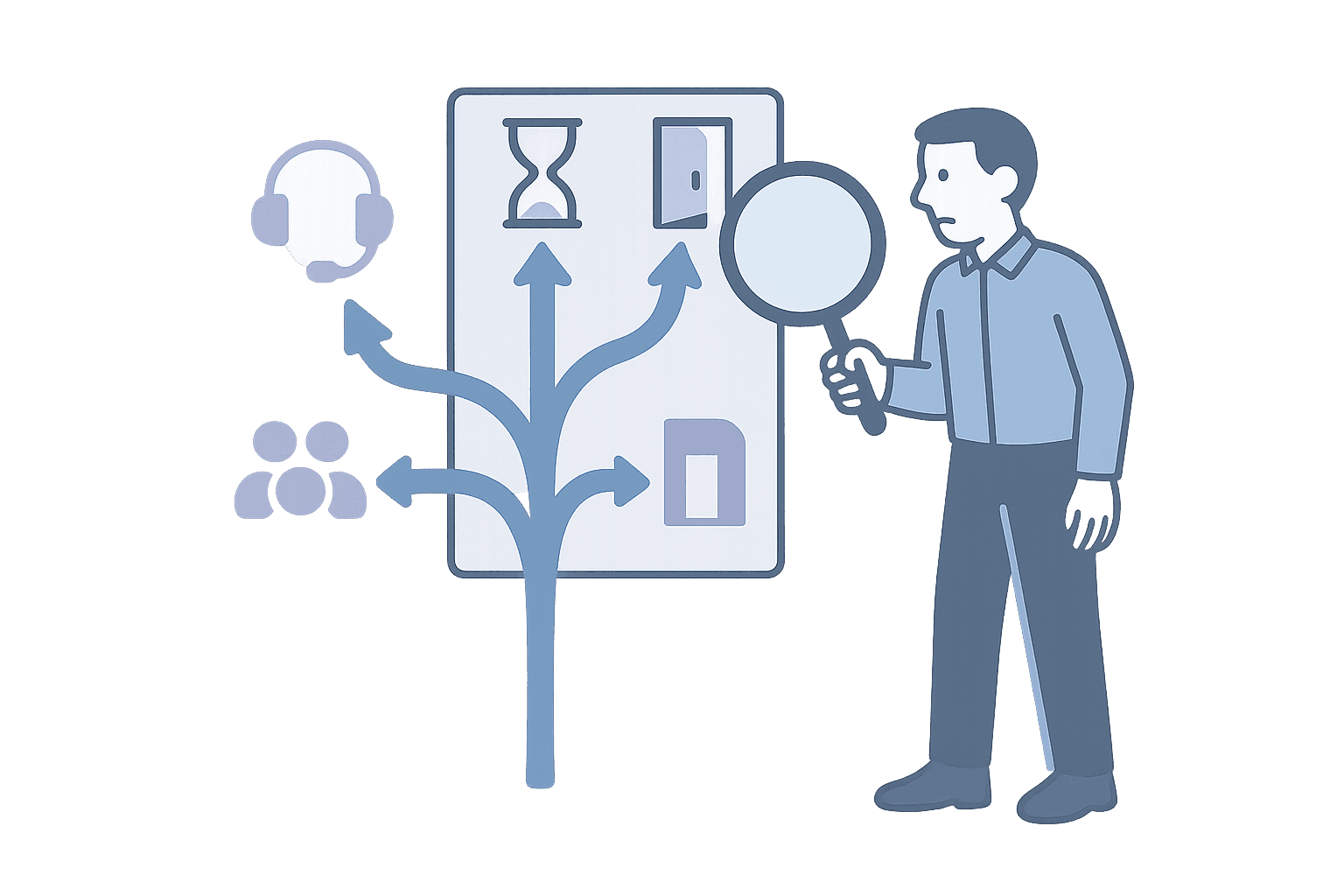
Before changing anything, figure out where the bottleneck is.
Is it distribution? Look at calls per person. Are some staff taking 3x the calls of others?
Is it escalation? Look at how long calls spend in escalation chains before connecting.
Is it staffing? Is capacity actually lower than demand during the spike, or is capacity being used inefficiently?
Is it overflow? When capacity is exhausted, is there an overflow path? Or do calls just queue indefinitely?
The answer determines the fix. Adding staff does not help if the problem is escalation delays. Shortening the IVR does not help if the problem is uneven distribution.
Routing fixes that reduce abandonment
Overflow and callback capture
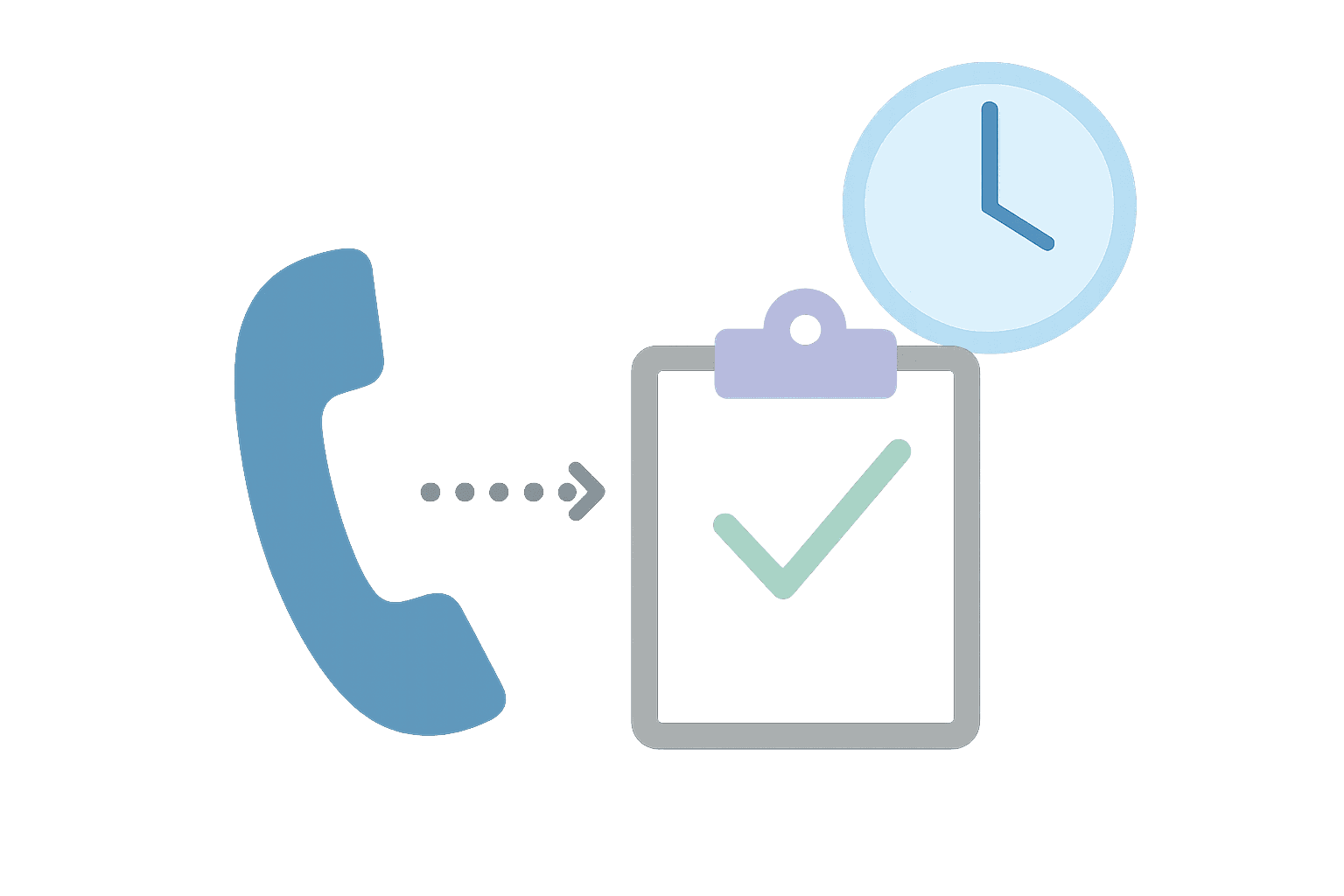
When demand exceeds capacity, switch from "connect now" to "capture and follow up." The caller leaves a number, the system creates a callback request, and staff follow up when available.
What it fixes: Preserves outcomes during spikes. Callers do not have to wait indefinitely or call back.
Tradeoff: Requires follow-up discipline. Callback requests without ownership become a different kind of missed call.
What to measure: Callback completion rate. Time from request to contact.
Overflow routing explains the patterns in detail.
Prioritization rules
If some calls are more urgent than others, prioritize them in the queue. High-priority callers get answered first.
What it fixes: Ensures the most important calls get through even during spikes.
Tradeoff: Only works if the priority signal is realistic. If callers cannot be identified reliably, prioritization creates friction.
What to measure: Priority call wait time vs general call wait time.
Escalation pattern changes
Switch from sequential to simultaneous escalation. Instead of trying Person A, then B, then C, ring all three at once.
What it fixes: Reduces time-to-answer. Whoever is available first takes the call.
Tradeoff: Can create noise fatigue if everyone's phone rings constantly. Accountability is less clear.
What to measure: Time-to-answer before and after. Staff feedback on noise.
IVR guardrails
Shorten the menu. Remove options that do not change routing. Get callers into the queue faster.
What it fixes: Reduces pre-queue delay. Callers start waiting for staff sooner.
Tradeoff: Less information from the caller. May require more triage after connection.
What to measure: Time in IVR. Abandonment during IVR vs during queue.
| Change | What it improves | Tradeoff | What to measure |
|---|---|---|---|
| Callback capture | Preserves outcomes during overload | Requires follow-up discipline | Callback completion rate, time to contact |
| Prioritization | Urgent calls get through | Needs reliable priority signal | Priority vs general wait times |
| Simultaneous escalation | Faster connection | Noise fatigue, unclear ownership | Time-to-answer, staff feedback |
| Shorter IVR | Faster queue entry | Less caller info | IVR time, abandonment during IVR |
What to measure after changes
After implementing fixes, track:
- Abandonment rate: Did it go down?
- Time-to-answer (P90): Did the tail improve, not just the average?
- Callback completion: If you added overflow, are callbacks actually being completed?
- Staff workload distribution: Did the changes concentrate load or spread it?
If abandonment drops but callbacks are not being completed, you have moved the problem, not solved it.
Getting started

How to reduce abandonment without chaos
- Diagnose the bottleneck: Is it capacity, escalation, IVR, or distribution?
- Choose one fix first: Do not change everything at once. Pick the fix that matches the bottleneck.
- Define overflow behavior: If capacity is the problem, add callback capture with clear ownership.
- Shorten the path to queue: If IVR is adding delay, cut options.
- Measure before and after: Track abandonment, time-to-answer, and callback completion.
- Turn it into requirements: Use call routing software requirements to formalize the changes.
Want us to follow up?
If volume spikes are common, start with overflow routing. The full framework for evaluating routing is in call routing solutions.