
Discover insights from a former non-profit crisis coordinator on how answering services can increase survivor hold times. They share practical solutions for agencies. This guest post expresses the author’s own views and they received compensation for writing it.

Survivors should not be on hold for long
Many agencies do their best to make sure that survivors reaching out don’t have to wait a long time before talking with an advocate, as delays can be discouraging at best, and life-threatening at worst. Agencies may also be concerned about grant-mandated limits on hold times.
Answering services often leave survivors on hold
Answering services often keep survivors waiting. They handle calls for many organizations and prioritize based on their own systems, which may not handle crisis calls well. This delay means that operators might not answer or transfer a victim’s call to an advocate quickly. I’ve used an answering service where important calls got delayed for hours due to their triage system. I once noticed a new call in the portal and only got the details because I called to ask. Imagine a survivor’s experience if they face this on their first hotline call.
Human error can cause delays
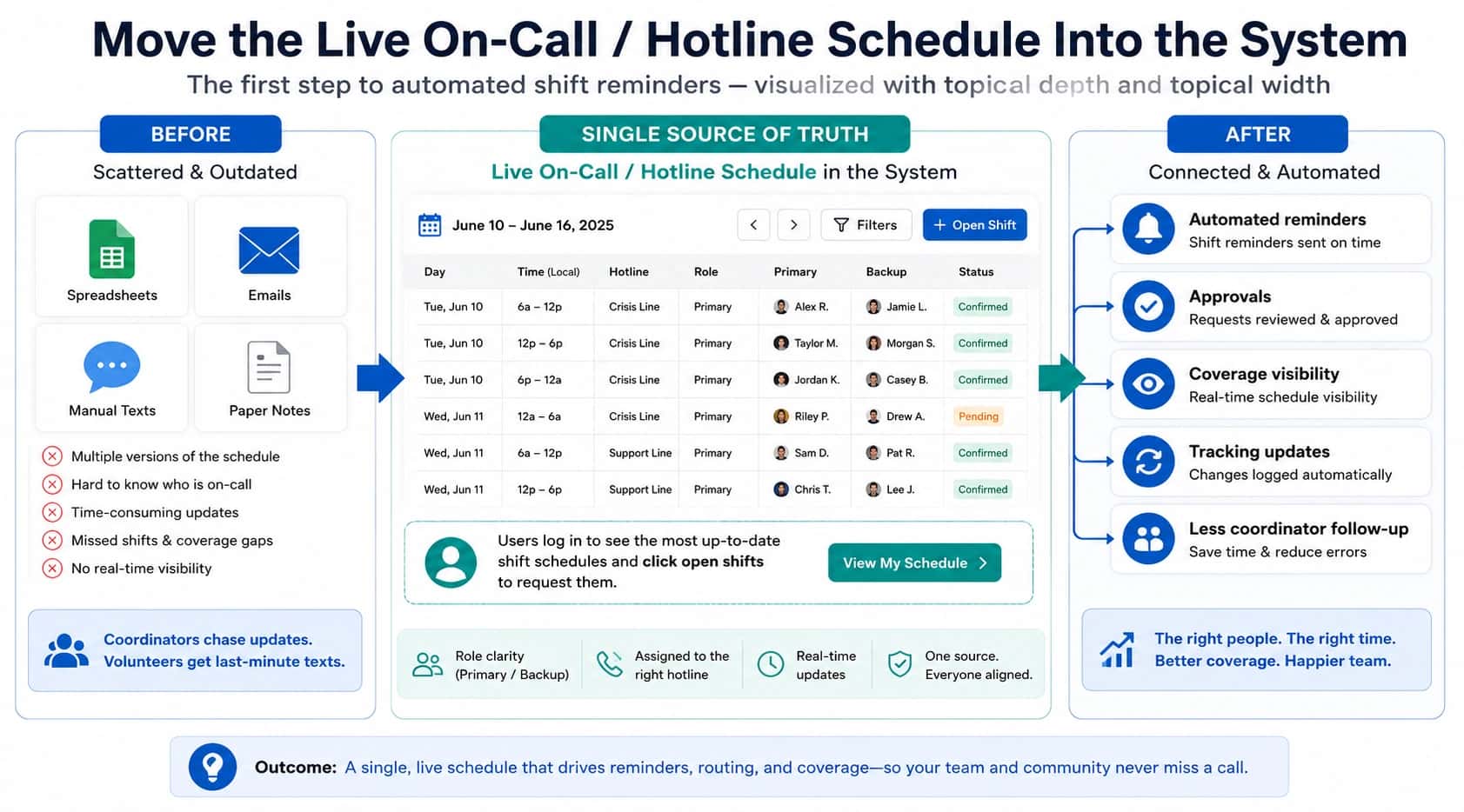
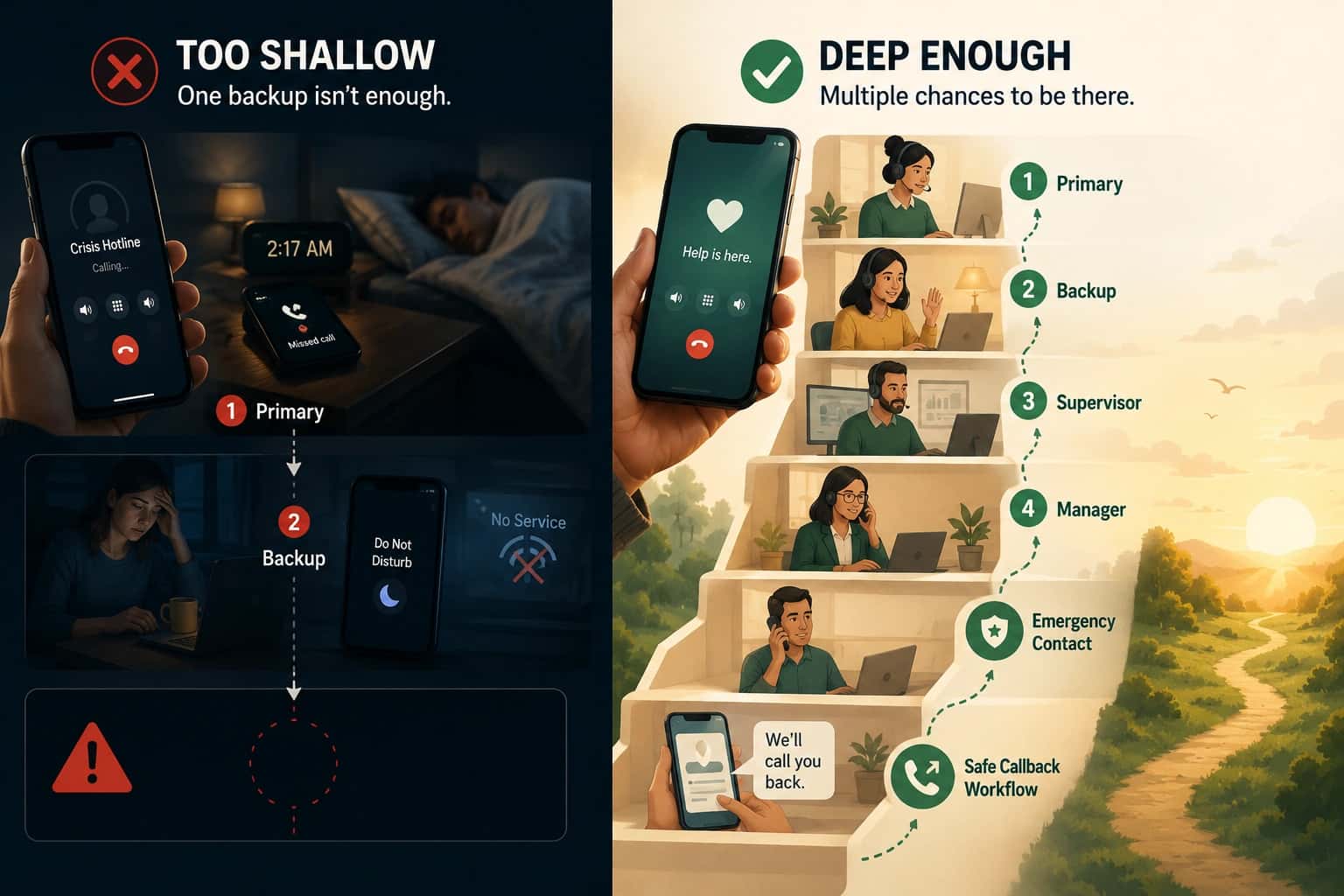
Many agencies give their schedules to answering services, but these services often call advocates out of order. One agency reported that their answering service would call only one advocate, regardless of her shift status, for every call. Operators can get overwhelmed by crisis calls, sometimes forgetting how to access the schedule or stop after contacting just the first person on the list.
These delays impact survivors
With issues like these, survivors will not receive timely services, or even not receive services at all. It can be so difficult as a crisis coordinator to know that there may be survivors reaching out and getting no services, because you may be unable to fix these issues permanently on your own.
You can reduce wait times for your agency
Long hold times often signal routing problems like escalation delays, understaffing during peaks, or missing overflow behavior. For a comprehensive look at routing fixes that reduce abandonment, see average caller wait time: routing fixes that reduce drop-off. The full framework for routing reliability is in call routing solutions.
If you want a defined next step when nobody can answer live, crisis callbacks can capture callback requests and coordinate safe follow-up without asking callers to wait on hold. If you want to explore permanent solutions for reducing wait times, improving call routing and scheduling, and preventing burnout, please schedule a free consultation meeting. Making these improvements helps ensure every survivor's call is answered. CONTACT OUR TEAM