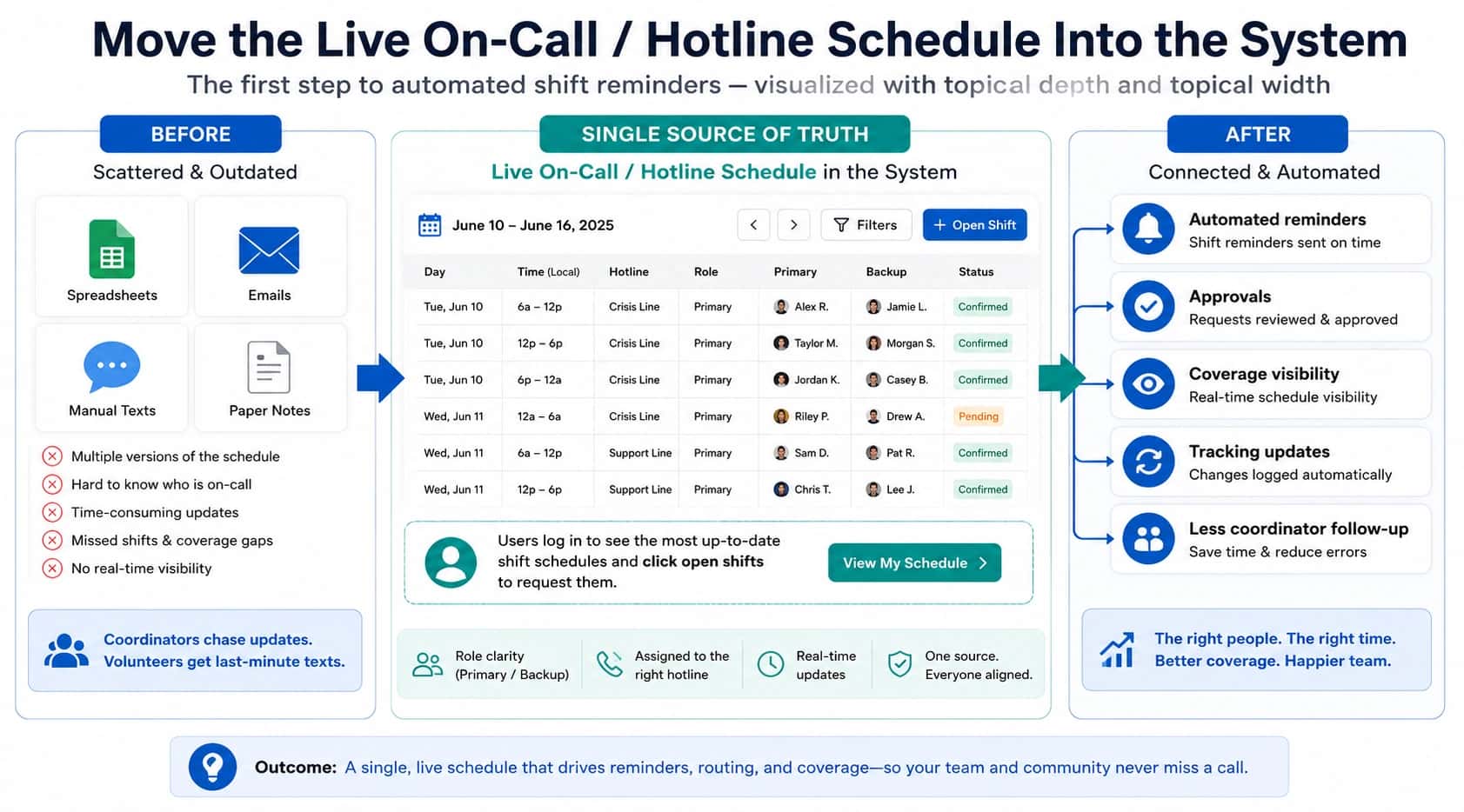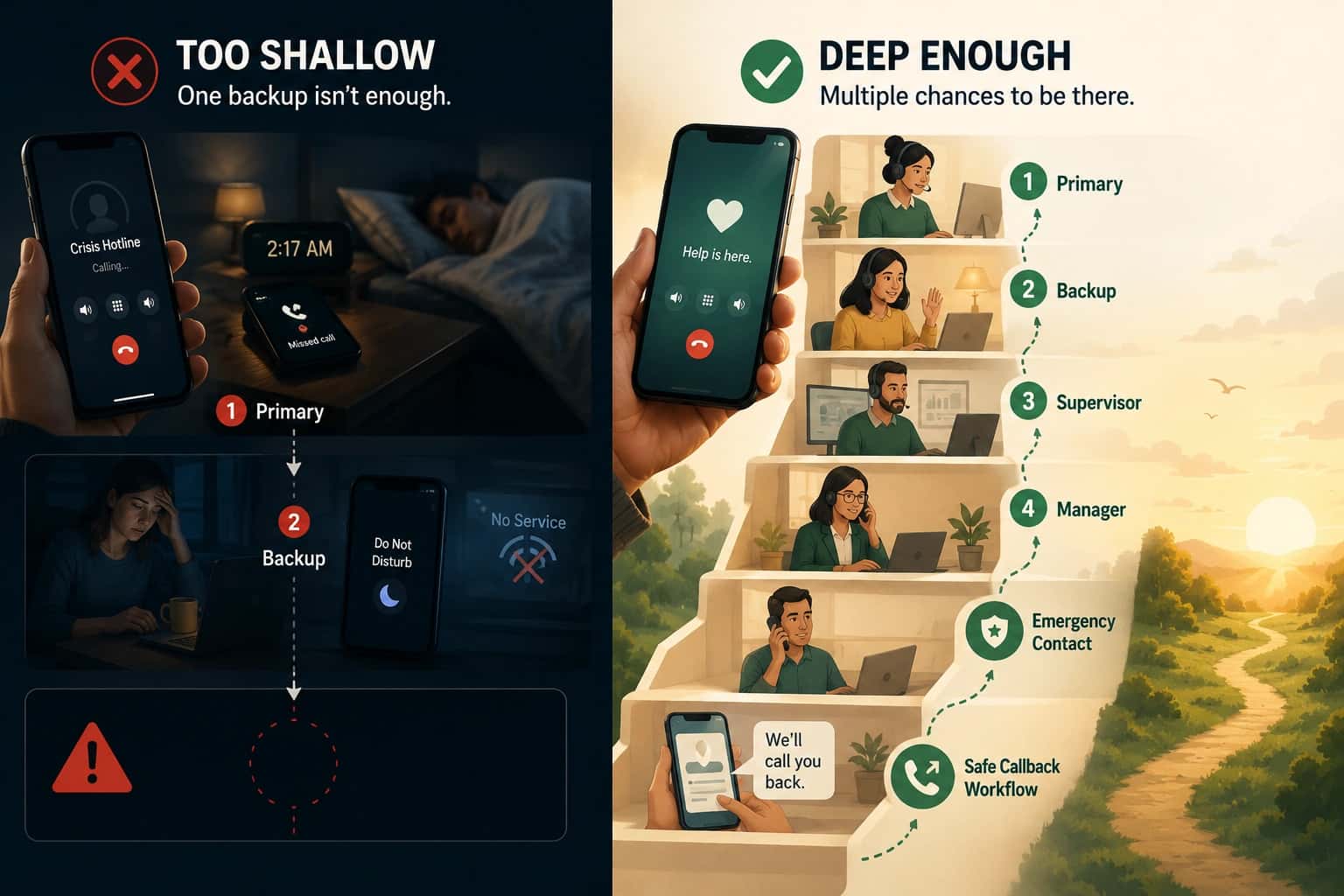
Every time the schedule changes, something breaks. Someone swaps shifts. Calls go to the old person. Someone takes PTO. Their phone still rings. A holiday creates a gap. Nobody notices until a caller complains.
The team keeps fixing individual incidents. Add a reminder to update forwarding. Send a Slack message when shifts change. Create a checklist. But the fixes do not stick. The next schedule change breaks something else.
The problem is not the schedule. The problem is governance. When schedules and routing are separate systems that require manual coordination, drift is inevitable. This page explains how to fix it. The full framework is in call routing solutions.
Why schedule changes break routing
Schedule changes are normal. Swaps, PTO, holidays, sick days, coverage adjustments. These happen constantly in any operation with rotating coverage.
The question is whether routing keeps up. In most setups, it does not. The schedule lives in one place (a calendar, a spreadsheet, a scheduling app). The routing lives in another place (the phone system, forwarding rules, a separate platform). When the schedule changes, someone has to remember to update both.
That "someone has to remember" step is where failures happen. People forget. Updates are delayed. One system gets updated but not the other. The gap between schedule and routing creates drift, and drift creates missed calls.
The governance model
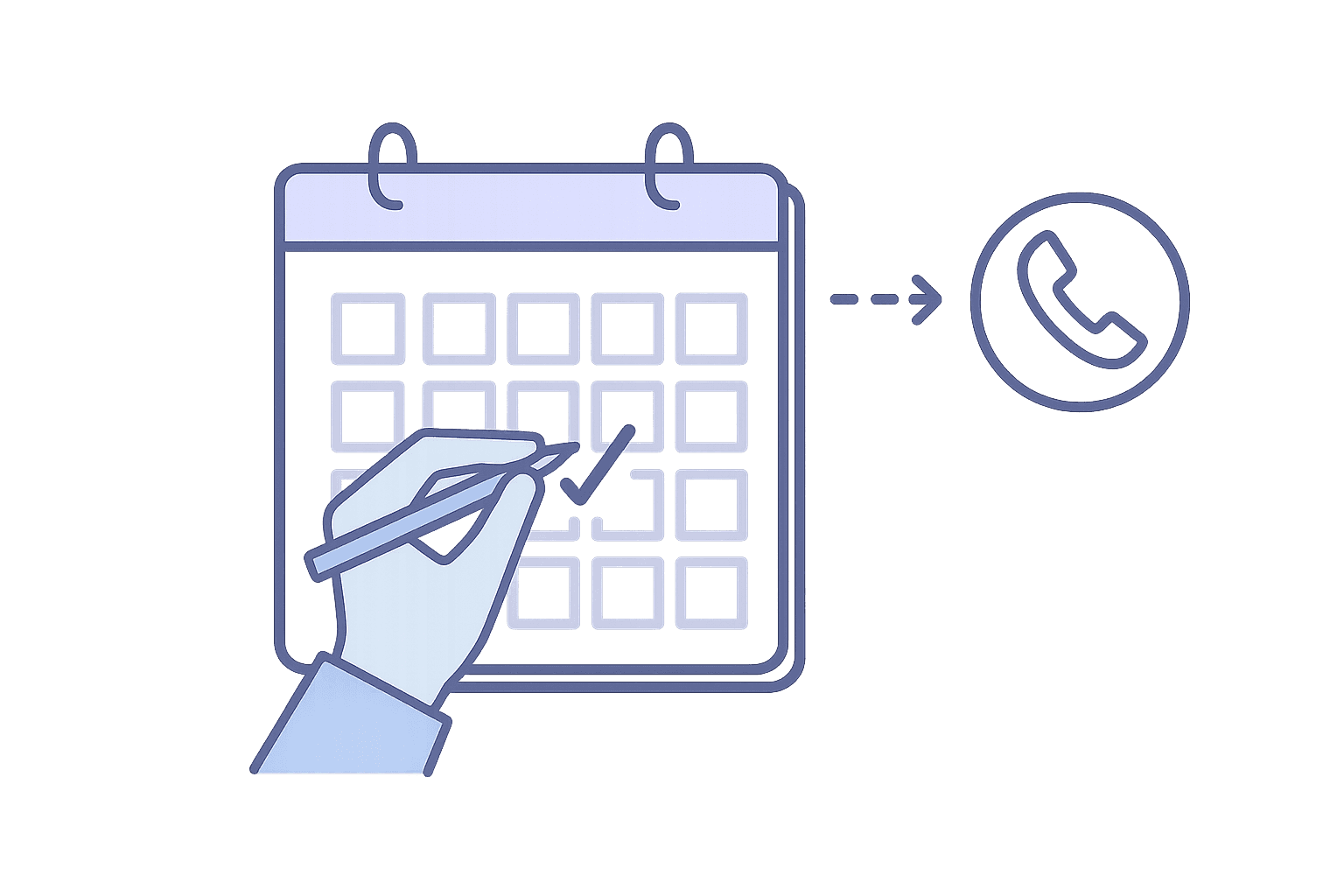
The fix is not more reminders. It is governance: treating schedule updates as controlled inputs with clear rules.
Single source of truth
There should be exactly one place where coverage is defined. The schedule is the source of truth. Routing reads from the schedule directly. When the schedule changes, routing changes automatically.
If updating coverage requires editing two systems (the schedule and the routing rules), you have two sources of truth. Drift is inevitable.
Ownership and change approval
Someone owns the schedule. That person (or team) has authority to make changes and is accountable for accuracy.
For critical changes (holiday coverage, extended PTO, shift structure changes), there should be an approval process. Not because people cannot be trusted, but because critical changes should be reviewed before they affect routing.
Auditability
You should be able to answer:
- Who changed the schedule?
- When did they change it?
- What did the schedule look like at the time of a specific call?
Without auditability, post-incident reviews become arguments about what the schedule "should have been." With auditability, you can prove what happened and fix the right thing.
Tested fallbacks for gaps
Even with good governance, gaps happen. Someone forgets to fill a slot. A swap is approved but leaves a hole. The system should detect these and escalate before calls go unanswered.
A simple fallback: if the schedule has no one assigned for a time window, route to a supervisor or backup pool and alert the schedule owner.
Quick remediation steps
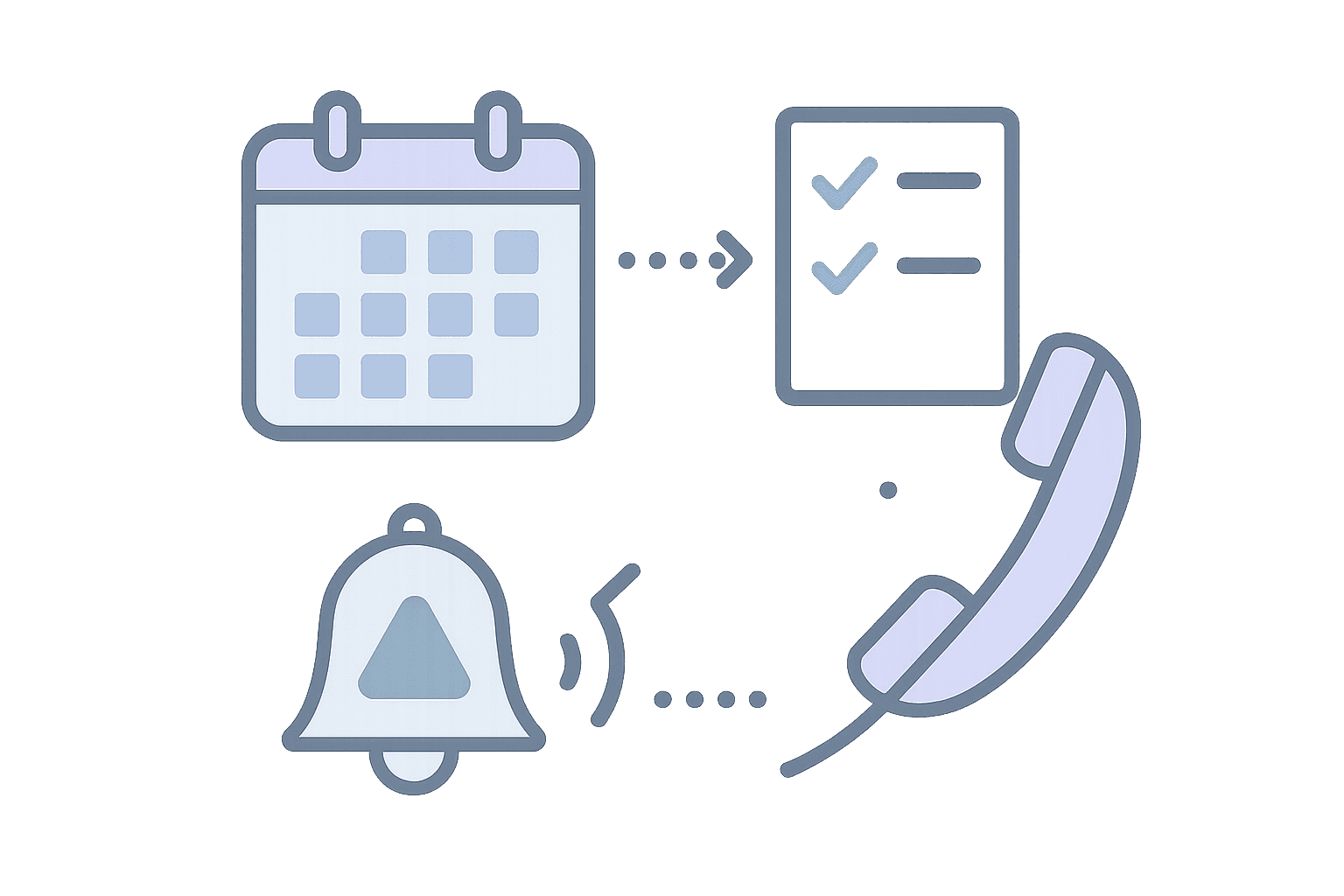
If routing keeps breaking every time the schedule changes, start here:
Consolidate the source of truth
Move schedule and routing into the same system, or create a direct integration where routing reads from the schedule. Eliminate manual sync steps.
Add a change checklist
For schedule changes that affect routing:
- Make the schedule change
- Verify routing reflects the change (test call if needed)
- Confirm fallbacks are in place for gaps
A simple checklist catches most drift before it causes missed calls.
Add drift detection signals
Monitor for mismatches:
- Calls routed to someone who is not on the schedule
- Schedule showing no coverage during active call times
- Routing pointing to a number that does not match the current on-call person
These signals catch drift early, before callers experience it.
Review schedule-routing alignment weekly
Pull a report: for each call, does the schedule match where the call went? If there are mismatches, investigate. Even one mismatch per week is a sign that governance is slipping.
Getting started
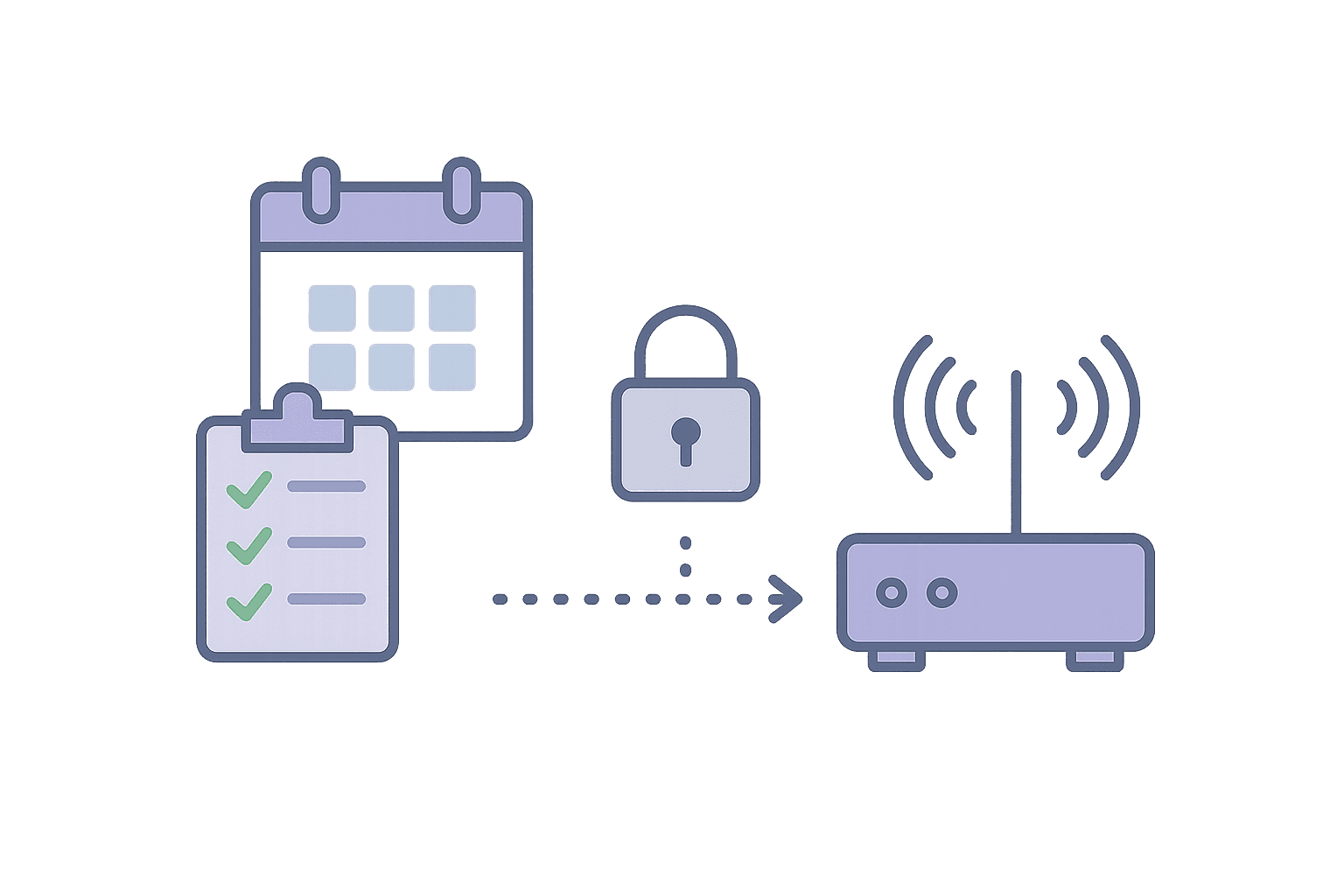
How to stop routing from breaking when the schedule changes
- Map current sources of truth: Where does the schedule live? Where does routing get its information? Are they the same?
- Identify the sync gap: What manual steps connect schedule changes to routing changes? Where do people forget?
- Consolidate if possible: Can routing read directly from the schedule? Can you eliminate the manual step?
- Add a change checklist: For changes that cannot be automated, create a checklist that includes verification.
- Add drift detection: Monitor for mismatches between schedule and routing. Alert when they diverge.
- Review weekly: Check for schedule-routing mismatches and fix governance gaps.
Want us to follow up?
If your coverage rotates daily, read the schedule-based routing explainer for the full pattern.
Then turn governance into evaluation requirements: call routing software requirements.