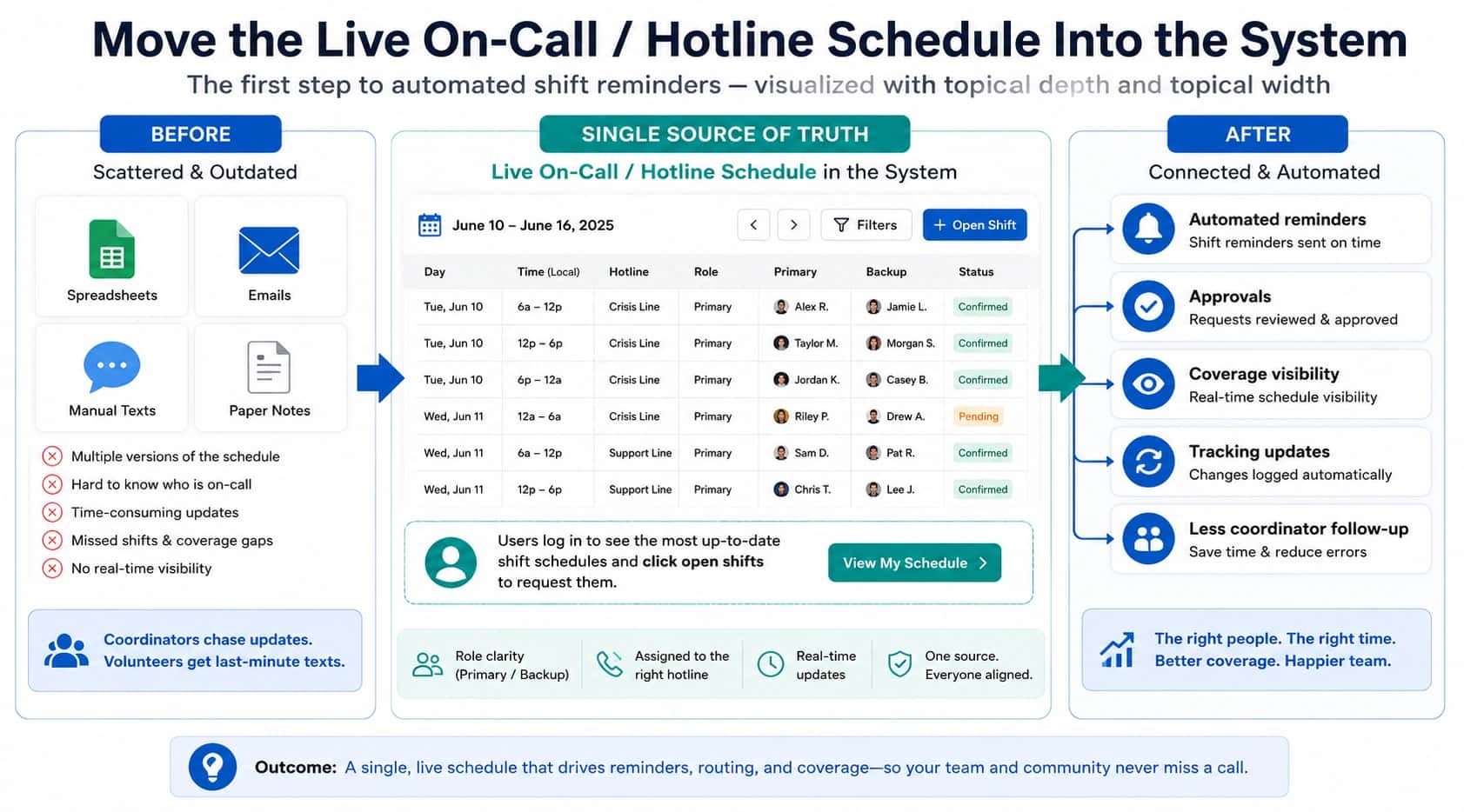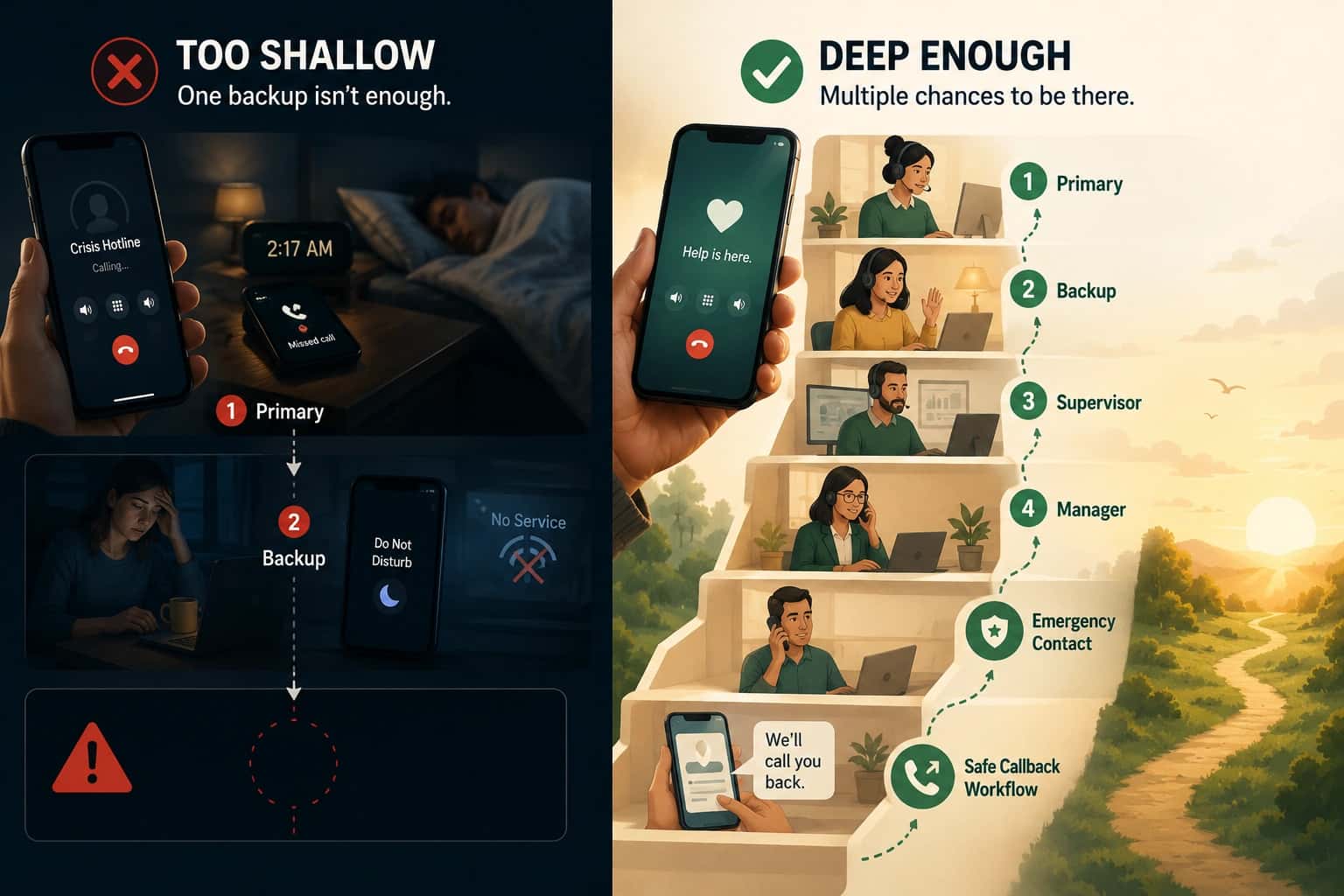
The primary on-call person does not answer. What happens next?
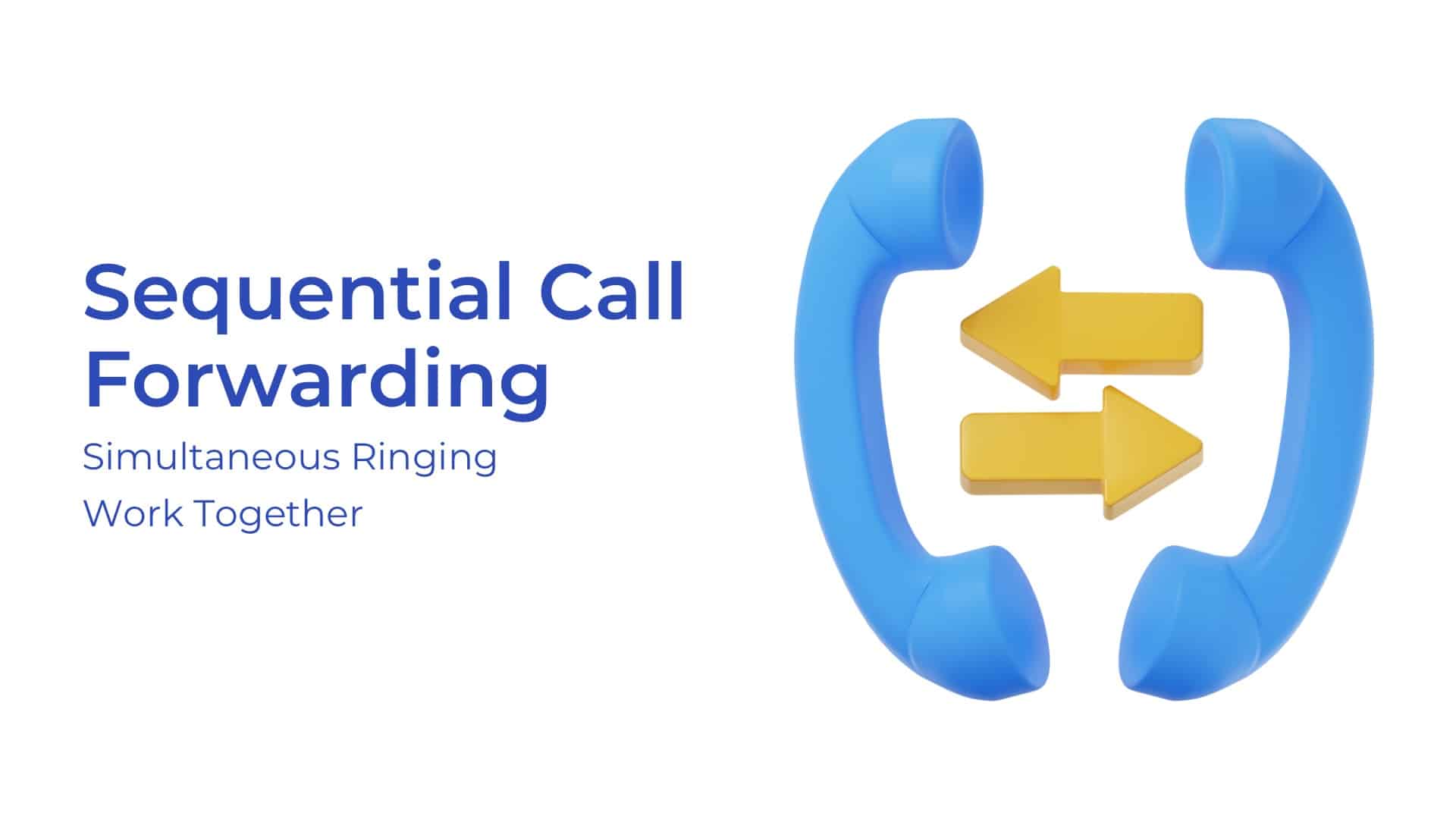
In some teams, the call rings for thirty seconds and then goes to voicemail. In others, it immediately tries a backup. In others, it rings three people at once and whoever answers first takes it.
Each of these is an escalation pattern. The right one depends on your staffing, your tolerance for missed calls, and your ability to track what happened. This page explains the tradeoffs. The full framework is in call routing solutions.
Why escalation is the core of reliability
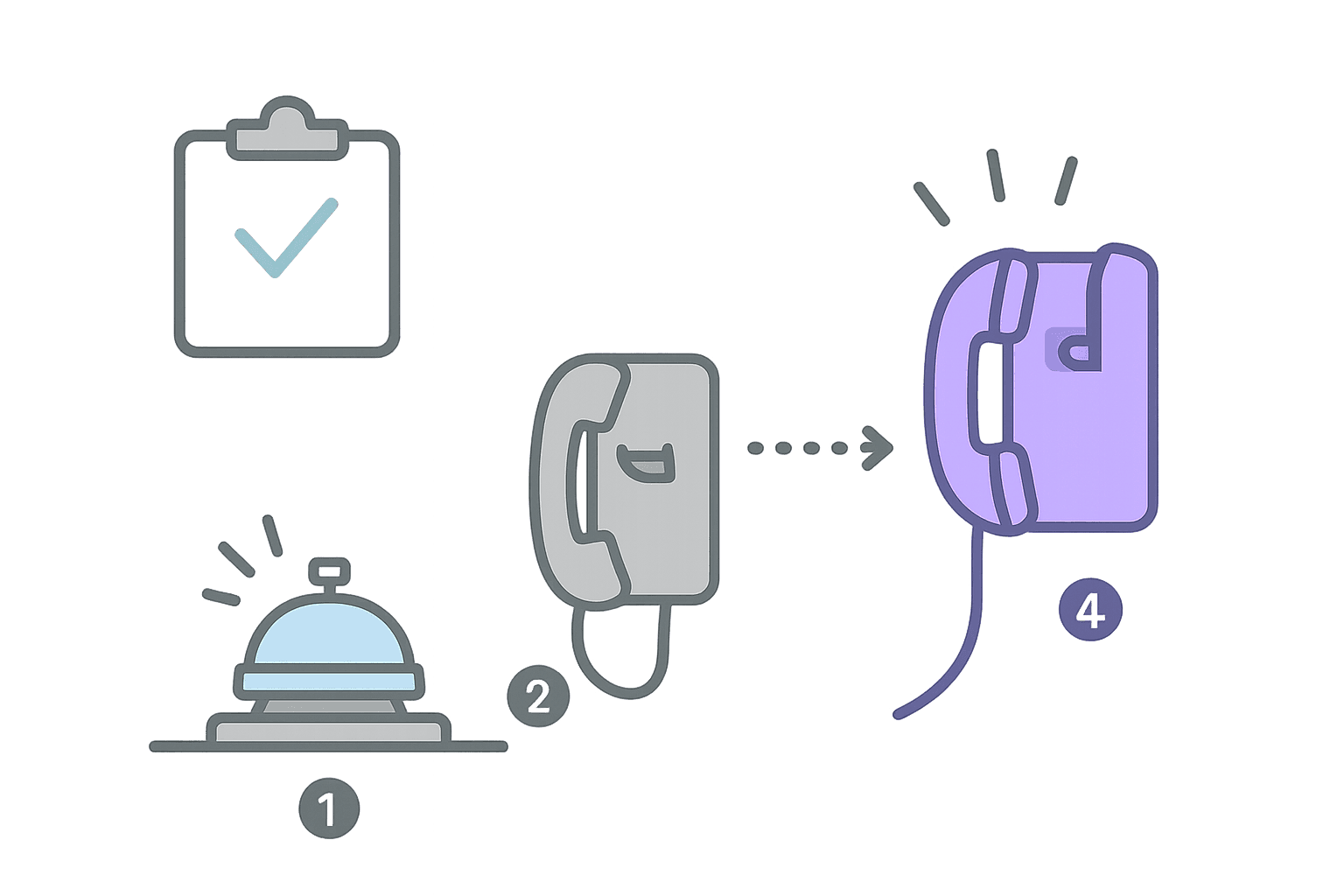
Routing is not about getting the first decision right. It is about guaranteeing the next decision exists when the first one fails.
The primary will sometimes be busy, unreachable, or slow to answer. That is normal. What matters is whether the system knows what to do next, how quickly it acts, and whether you can prove it happened after the fact.
Without explicit escalation, missed calls look like bad luck. With explicit escalation, missed calls become diagnosable failures with clear remediation paths.
Pattern 1: Sequential (fixed order)
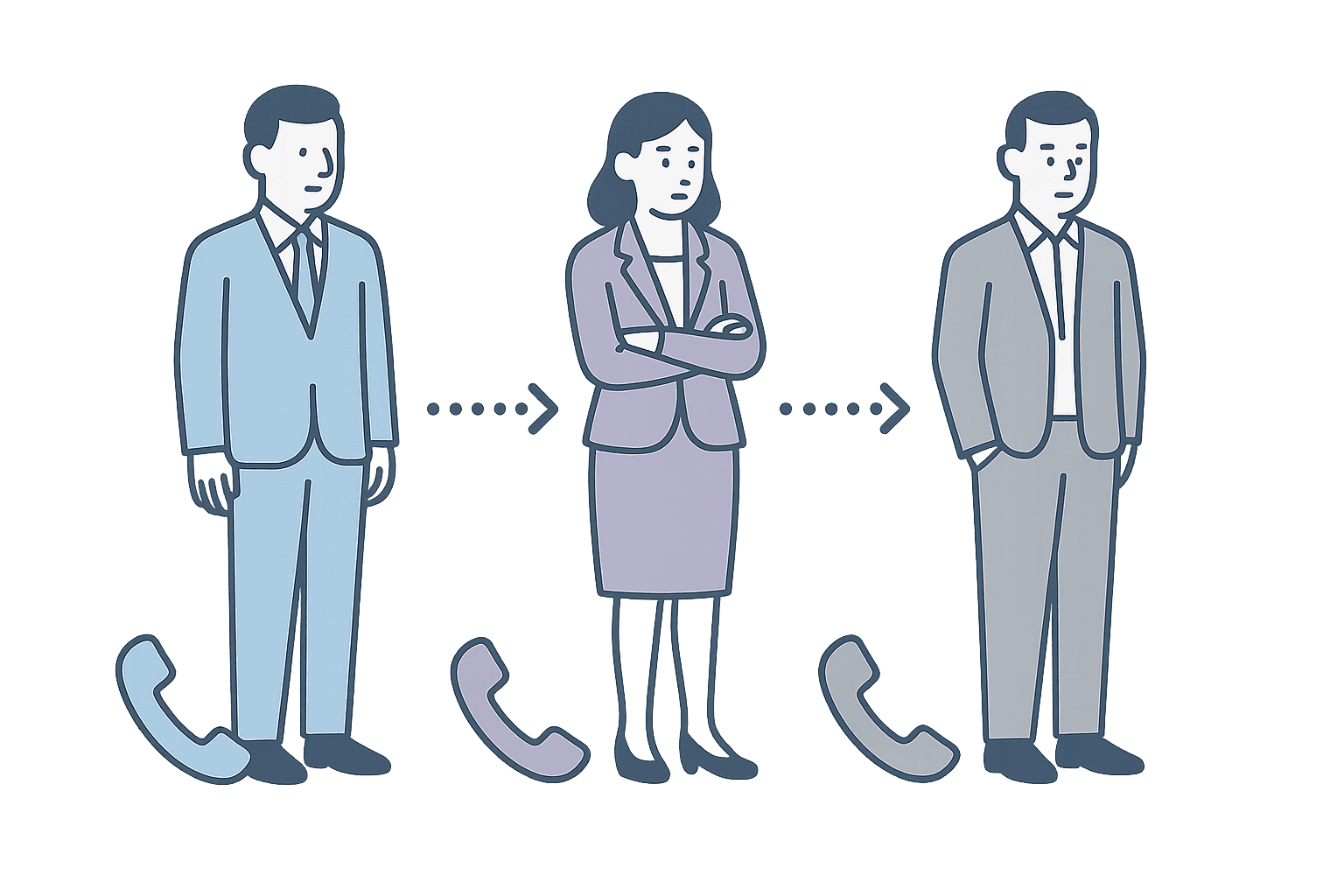
Sequential routing tries one person, waits for a timeout, then tries the next person in a fixed order. Primary, then backup, then supervisor.
How it works: Call rings Person A for 20 seconds. No answer. Call rings Person B for 20 seconds. No answer. Call rings Person C. If nobody answers, the call goes to overflow (voicemail, callback capture, or abandonment).
Benefits:
- Simple to understand and configure
- Clear accountability (everyone knows who is "first")
- Easy to audit (logs show exactly who was tried in what order)
Failure modes:
- Slow. If each tier gets 20 seconds, a three-tier escalation takes a full minute before overflow.
- Load concentration. The first person in the sequence carries disproportionate load.
- Sensitive to timeout settings. Too short and you escalate prematurely. Too long and callers abandon.
When it fits: Small teams with clear primary/backup roles and tolerance for slightly longer connection times.
The classic mistake is optimizing ring counts without understanding the tradeoffs. Number of rings: how not to optimize your hotline explains why.
Pattern 2: Simultaneous (ring groups)
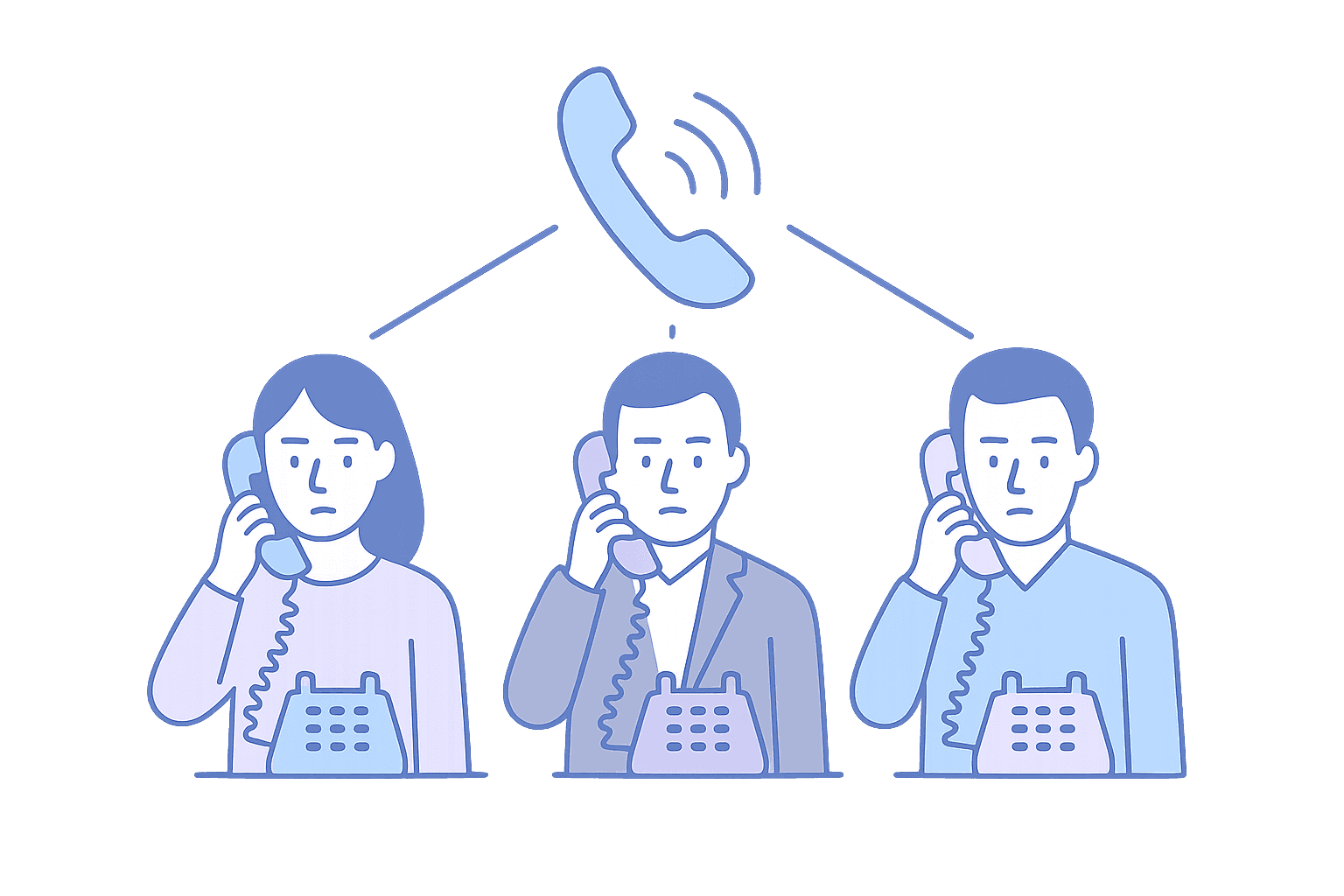
Simultaneous routing rings multiple people at the same time. Whoever answers first takes the call.
How it works: Call rings Person A, Person B, and Person C all at once. The first person to pick up gets connected. The others stop ringing.
Benefits:
- Fast. The call gets answered as soon as anyone is available.
- No load concentration on a single person (in theory).
- Simple to scale by adding more people to the group.
Failure modes:
- Unclear ownership. If everyone's phone rings, nobody feels personally responsible for answering.
- Noise. Staff get fatigued by constant ringing for calls someone else will answer.
- Cherry-picking. People learn to wait and see if someone else picks up, especially for difficult callers.
- Harder to audit. "The call was answered" does not tell you who else could have answered or why they did not.
When it fits: Teams where speed matters more than accountability and where staff are disciplined about answering.
Pattern 3: Tiered escalation
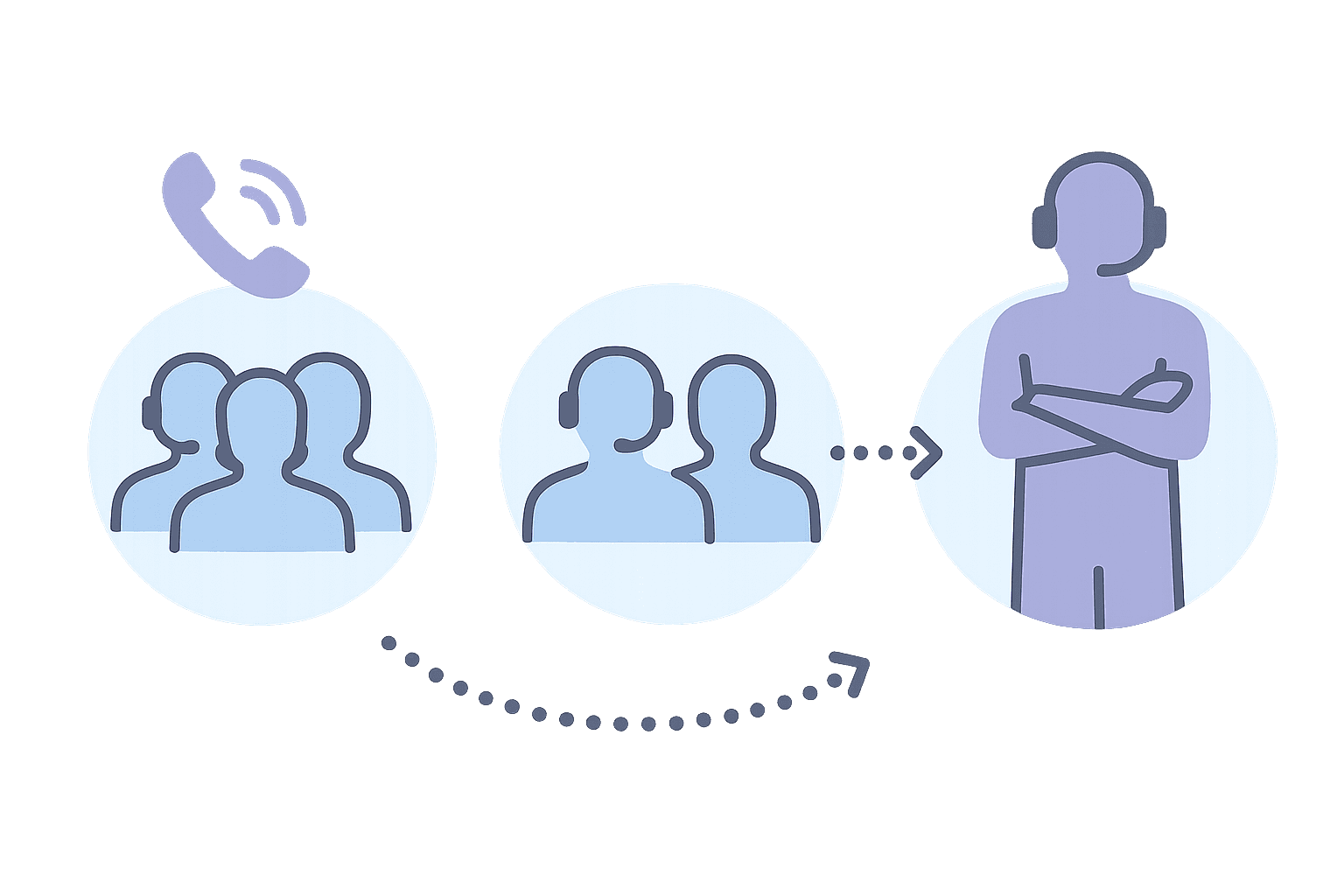
Tiered escalation combines sequential and simultaneous patterns. Ring a group first, then escalate to a backup group, then to a supervisor tier.
How it works: Call rings Tier 1 (three advocates simultaneously) for 15 seconds. No answer. Call rings Tier 2 (two senior advocates simultaneously) for 15 seconds. No answer. Call escalates to Tier 3 (supervisor on-call). If nobody answers, overflow behavior triggers.
Benefits:
- Balances speed and accountability
- Allows specialization (junior staff handle most calls, supervisors handle escalations)
- Provides natural load distribution within tiers
Failure modes:
- Complexity. More tiers means more configuration and more places for errors.
- Tier boundary confusion. When does something become a "Tier 2 problem"?
- Governance overhead. Keeping tier assignments accurate requires maintenance.
When it fits: Larger teams with clear role distinctions and the governance capacity to maintain tier assignments.
The auditability requirement
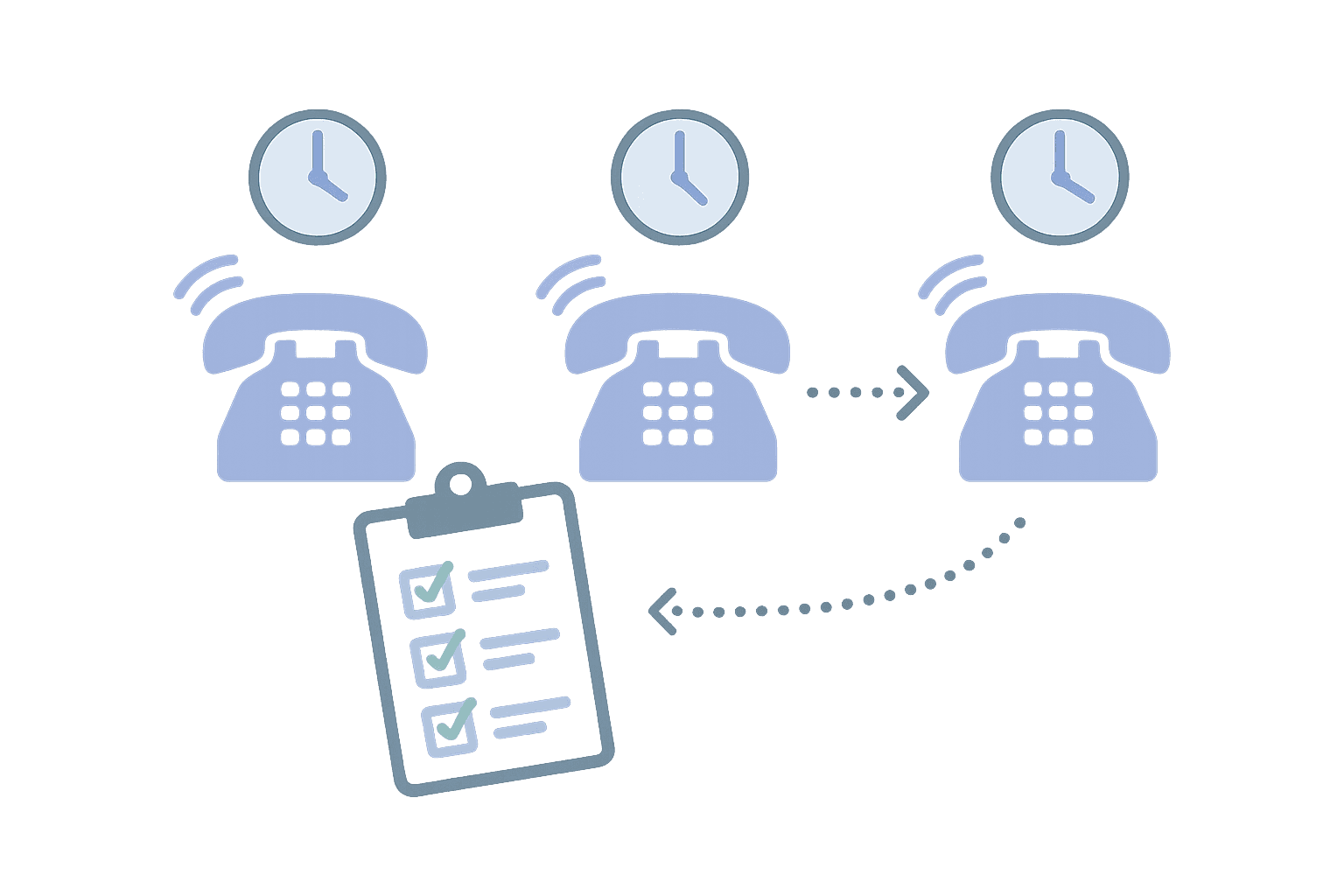
Every escalation pattern needs an audit trail. After a missed call, you should be able to answer:
- Who was tried?
- In what order?
- How long did each ring?
- Why did escalation happen (timeout, busy, unreachable)?
- What was the final outcome (answered, overflow, abandoned)?
Without this, troubleshooting becomes guesswork. "The call was missed" tells you nothing. "The call rang Primary for 20 seconds (no answer), rang Backup for 15 seconds (busy), then went to voicemail" tells you exactly where to focus.
If escalation decisions are part of your internal on-call workflow, make audit logs a requirement, not a nice-to-have. On-call management software shows what an audit trail should capture so missed calls and escalations are reviewable without guesswork.
For nonprofit hotlines, escalation often breaks at shift changes and volunteer swaps. If your routing depends on people remembering to update forwarding, schedule-based call routing explains how to tie escalation to the schedule so coverage changes are reflected automatically.
| Pattern | What it optimizes | What it hides | What to log |
|---|---|---|---|
| Sequential | Clear accountability | Slow under load | Who was tried, how long, why escalation triggered |
| Simultaneous | Speed to answer | Who could have answered but didn't | Who answered, who else was ringing, ring duration |
| Tiered | Balance of speed and structure | Tier boundary failures | Which tier was tried, escalation reasons, final outcome |
Getting started
How to choose and configure an escalation pattern
- Start with your failure tolerance: How long can a caller wait before the call must be answered or captured?
- Match the pattern to your staffing: Small team with clear roles? Sequential. Larger team where speed matters? Simultaneous or tiered.
- Define timeouts explicitly: How many seconds before escalation? Write it down.
- Define the final fallback: What happens if nobody in any tier answers? Voicemail? Callback capture? Overflow to a partner?
- Require audit logs: Can you prove who was tried and why escalation happened?
- Turn it into requirements: Use call routing software requirements to evaluate fit.
Want us to follow up?
The full framework for evaluating routing as a reliability system is in call routing solutions.