
Using a 3rd party hotline operator to answer your hotline can give your agency flexibility for 24/7 coverage. It can also introduce serious problems that affect the caller experience. This post explains what to look for and how to surface issues before they become patterns.
Is this article for me?
This article is for you if:
- Your agency uses an answering service.
- Your agency is considering using a 3rd party answering service or call center to field calls.
3rd Party Hotline Operators are often not trained
I have heard an answering service operator express confusion to their supervisor about a caller because ‘men don’t get raped’, a myth about sexual violence that many agencies work hard to dispel.
A client once shared that an answering service staffer directly called them and criticized their service request. Some operators have also tried giving support themselves, leading to problems with confidentiality and giving incorrect or harmful advice.
Another operator wrongly informed a caller that the rape crisis center couldn’t assist with sexual harassment issues, even though the center’s advocates are trained to help with such cases.
Former crisis coordinator at a rape crisis center
Third party hotline operators, also known as answering service operators, are often not trained in the specifics of your field. This can create serious issues for your agency.
Do you know what your answering service is saying?
The agencies mentioned in the quote above were unable to permanently correct the errors they experienced, despite doing frequent quality assurance checks with their answering services.
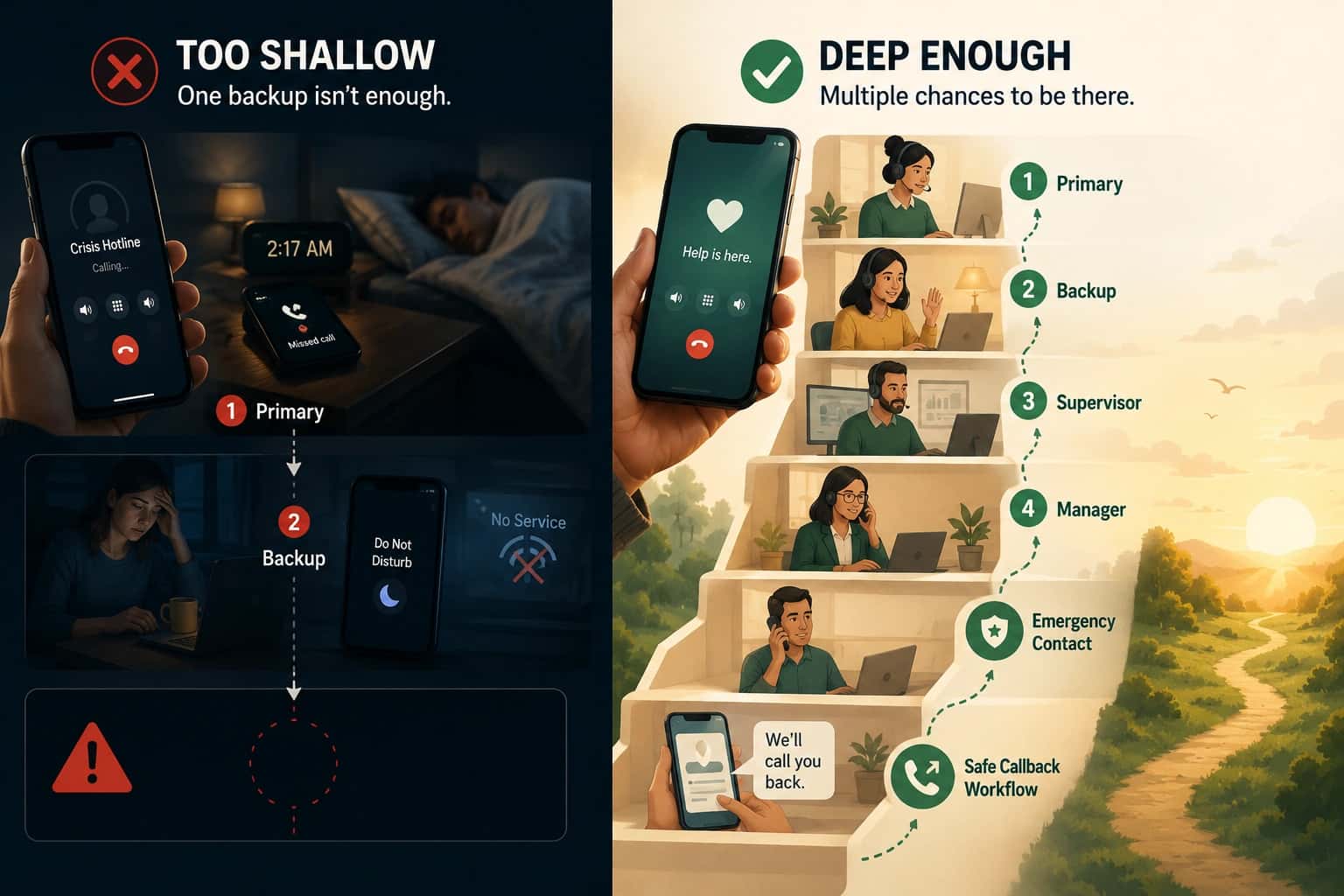
You’re taking on a lot of risk by having a 3rd party answer calls to your hotline. In their own way they may think that they’re helping, but they might actually be causing a lot of harm, deterring people from connecting with you.
FAQ
›How do I know if this is happening at our agency?
Audit your own hotline. Try calling your hotline at different times of the day to see what actual callers experience. Operators typically have a script, but you may experience that they go off-script, and that different operators (which are on at different times) go off-script in different, and sometimes surprising ways.
Check your reviews: Many agencies lack reviews, but if yours receives feedback on sites like Yelp and Google, it’s crucial to see if your answering service operator is mentioned and any issues are flagged.
›We use an answering service because they help us block inappropriate callers. Are there alternatives?
Yes! There are lots of approaches that can be even more effective. Check out our FAQ page or connect with an expert to learn more.
›We use an answering service because we need to patch callers through to different people depending on the type of call, our on-call schedule, and several other factors. Are there alternatives?
Yes! We can patch callers through to your advocates based on the type of call, your (complex) on-call schedules, and much more. Feel free to reach out to learn more.
Looking for a better approach?
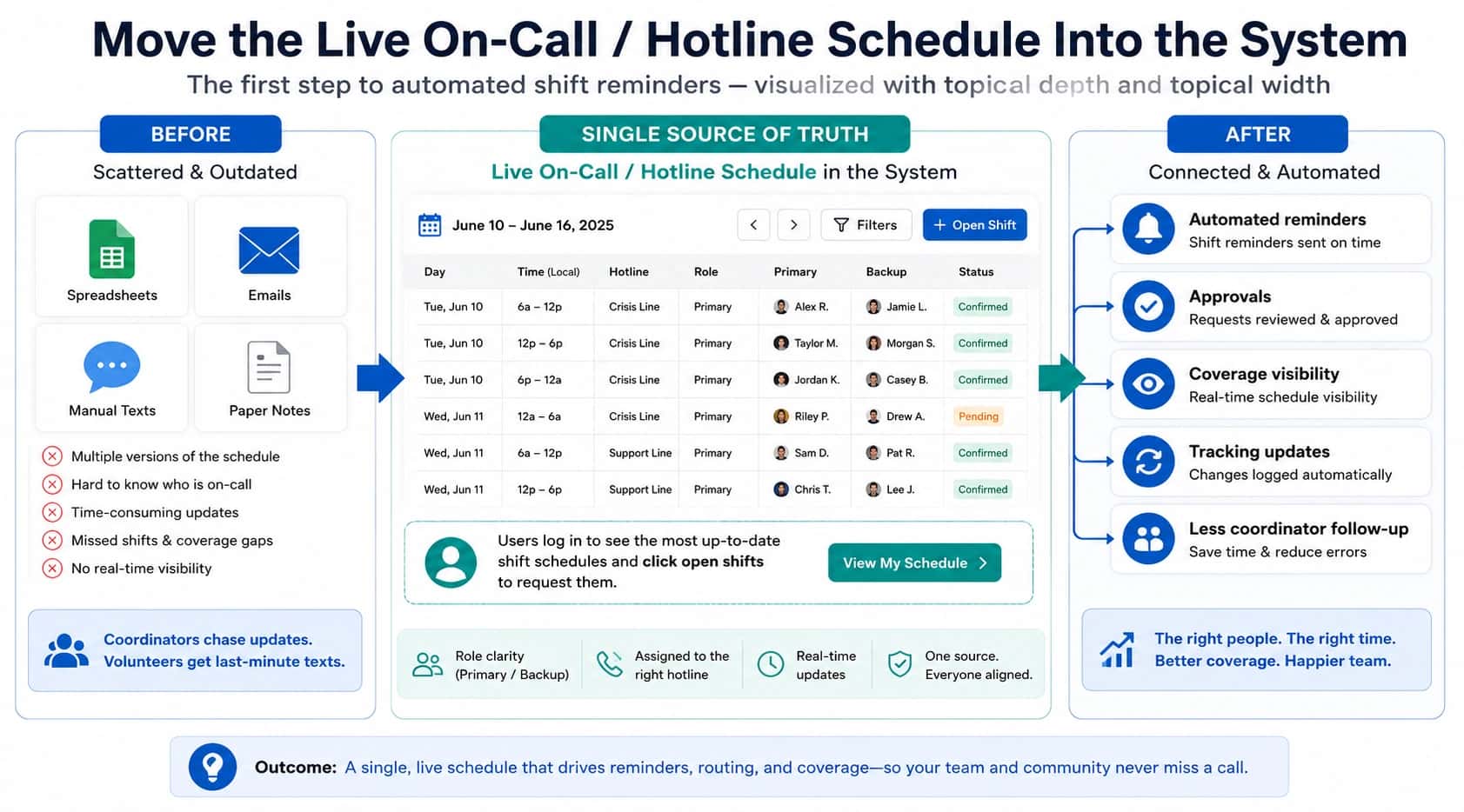
If you'd like to learn more about how your agency can move away from your answering service then check out our sophisticated call forwarding system. It includes burnout protection, support chat and much more.
For a comprehensive framework on what to require from any routing system, including fallbacks, overflow behavior, and audit trails, see call routing solutions.
If you have more questions, feel free to reach out to our experts for free concierge support or check out our FAQs.
Helpline Software for On-call Teams and Hotlines
The official Helpline Software platform is a property maintenance answering service alternative that can manage multiple phone numbers and on call schedules for different teams or service lines.
With escalation and rotation features that can replace a traditional answering service for schedule-based routing, the official Helpline Software platform is a SaaS on-call phone system.