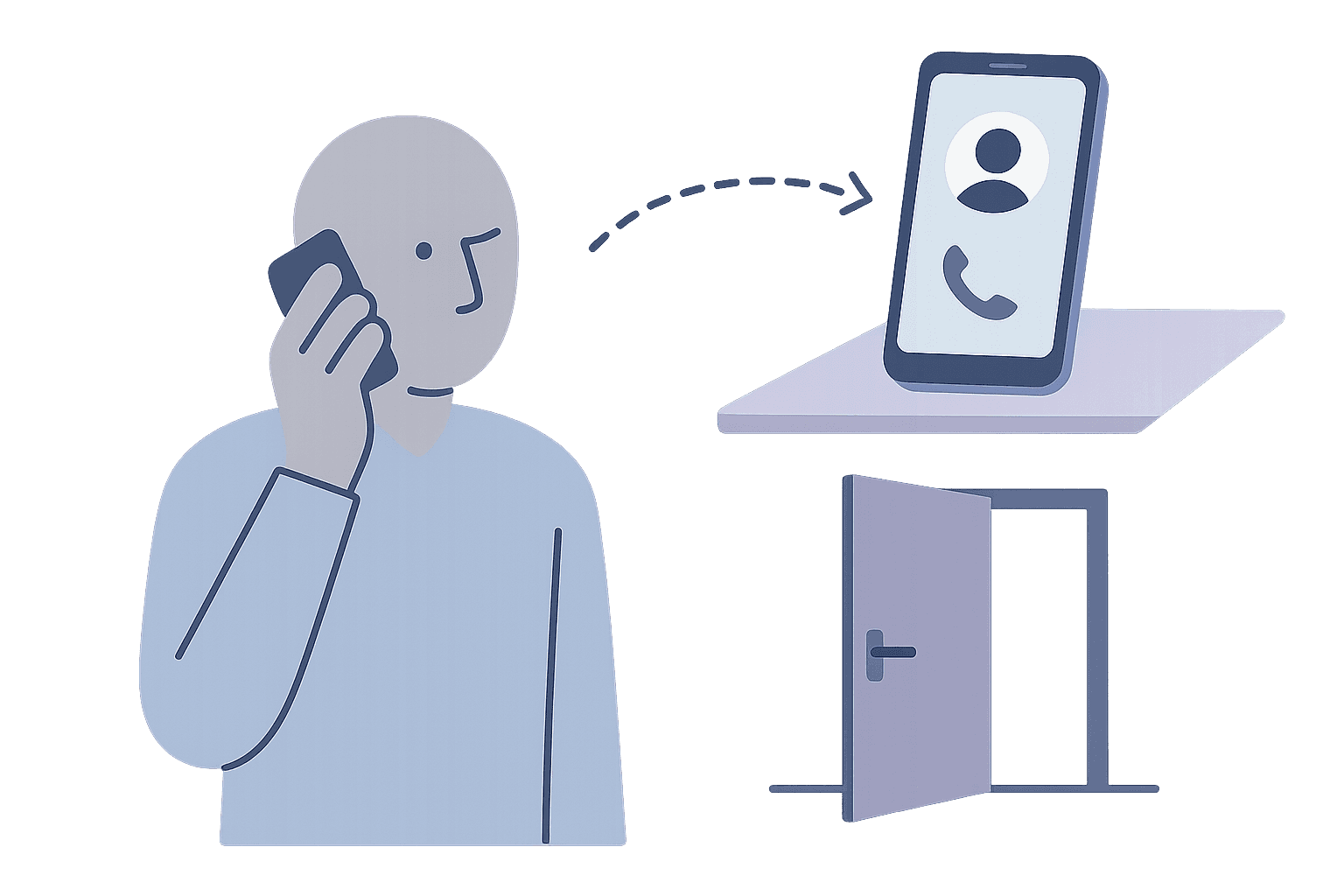
A staff member takes an after-hours call on their personal phone. The caller sees the number in their call history. A week later, the caller calls back directly, bypassing the hotline entirely. The staff member now has a caller contacting them outside of work hours, outside of the system, with no supervision or documentation.
That is what happens when routing improves reachability without adding safety boundaries. More reliable routing means more calls get through. Without privacy protections, more calls getting through can mean more exposure for staff.
This page explains how to design safety boundaries into routing. The full framework is in call routing solutions.
Why safety is part of reliability
Reliability and safety are not tradeoffs. They are linked. A routing system that burns out staff is not reliable. A system that exposes staff to harassment is not safe to use. Staff who feel unsafe will avoid answering, and that breaks routing from the inside.
The goal is routing that connects callers to the right people while protecting those people from exposure, harassment, and unsustainable workload.
Privacy risks in on-call routing
Personal number exposure
When calls route to personal cell phones, caller ID can expose the staff member's number. Even if the outbound display is masked, some callbacks or missed-call returns can reveal the underlying number. Once a caller has a staff member's personal number, they can contact them directly, outside of any system.
Callback identity leakage
If staff return calls from their personal phones (because the system does not support coordinated callbacks), the caller captures that number. The same exposure risk applies.
Repeat unwanted callers
Some callers are inappropriate, abusive, or persistent in ways that harm staff. Without controls, routing treats every call the same. The same person can call repeatedly, targeting specific staff members, with no way to limit or flag the behavior.
After-hours intrusion
If routing sends calls to personal devices 24/7 without boundaries, staff never get a break. Even "just one call" at 11pm disrupts rest. Over time, this creates burnout that routing metrics will not capture until staff leave.
Safety boundaries to design for
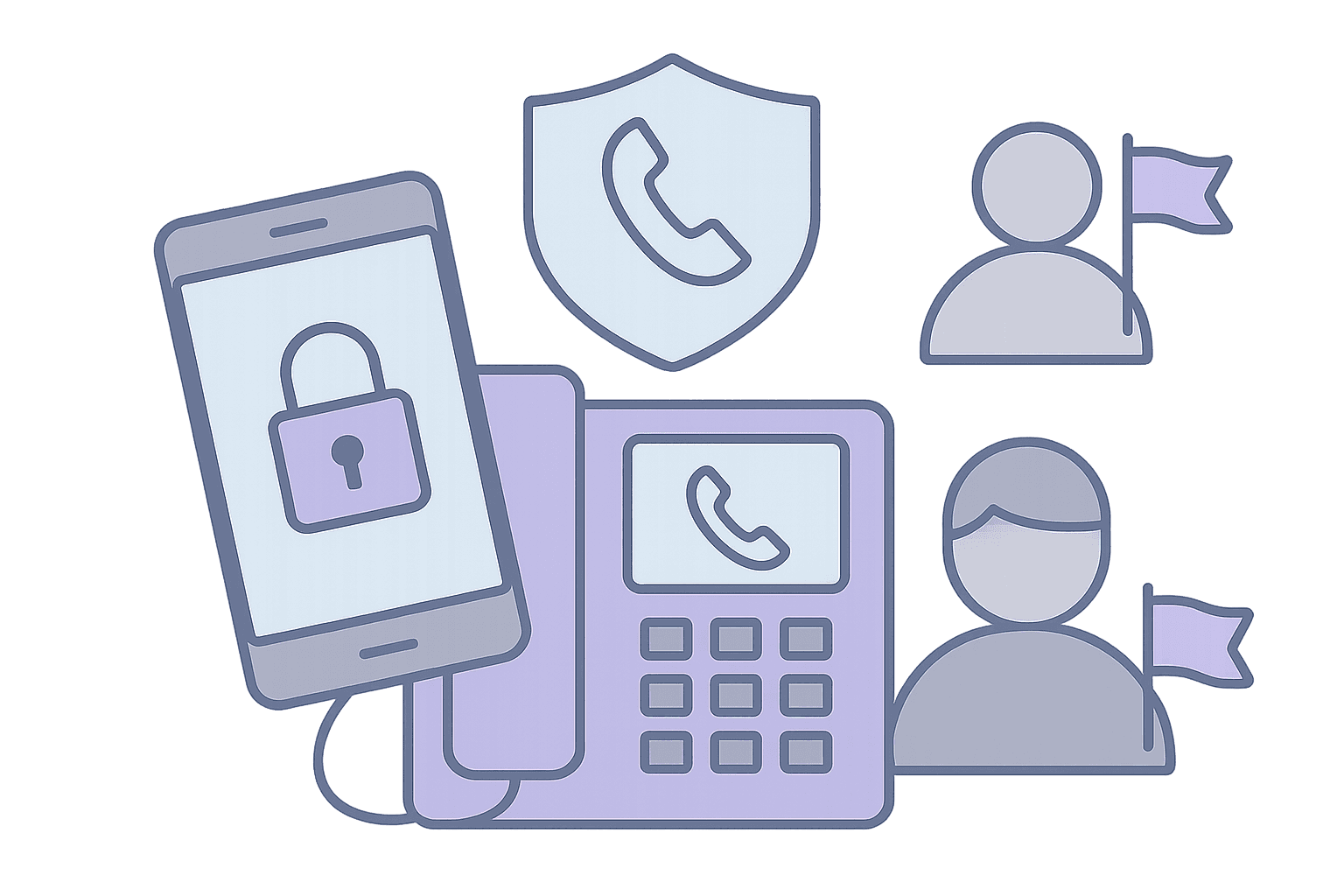
Number masking
Masking means the caller sees a central number (like the hotline number) instead of the staff member's personal number, regardless of which device the call actually rings.
What it protects: Prevents callers from capturing staff personal numbers.
What to require: Outbound caller ID shows the hotline number, not the staff number. Callbacks route through the system, not directly.
Unwanted caller controls
Unwanted caller controls let you flag, limit, or block specific callers. This can mean routing certain callers to a supervisor, limiting call frequency, or blocking entirely.
What it protects: Shields specific staff from harassment. Reduces repeat abuse.
What to require: Ability to flag callers by number. Routing rules that apply to flagged callers. Visibility into who flagged whom and why.
Shared visibility into flagged callers
If one staff member flags a caller as problematic, other staff should be able to see that flag before the call connects. This prevents the caller from simply calling back and reaching someone else who does not know the history.
What it protects: Prevents harassers from "shopping" for different staff.
What to require: Flags are visible to all staff, not just the person who set them. Flags include context (why flagged, when, by whom).
After-hours boundaries
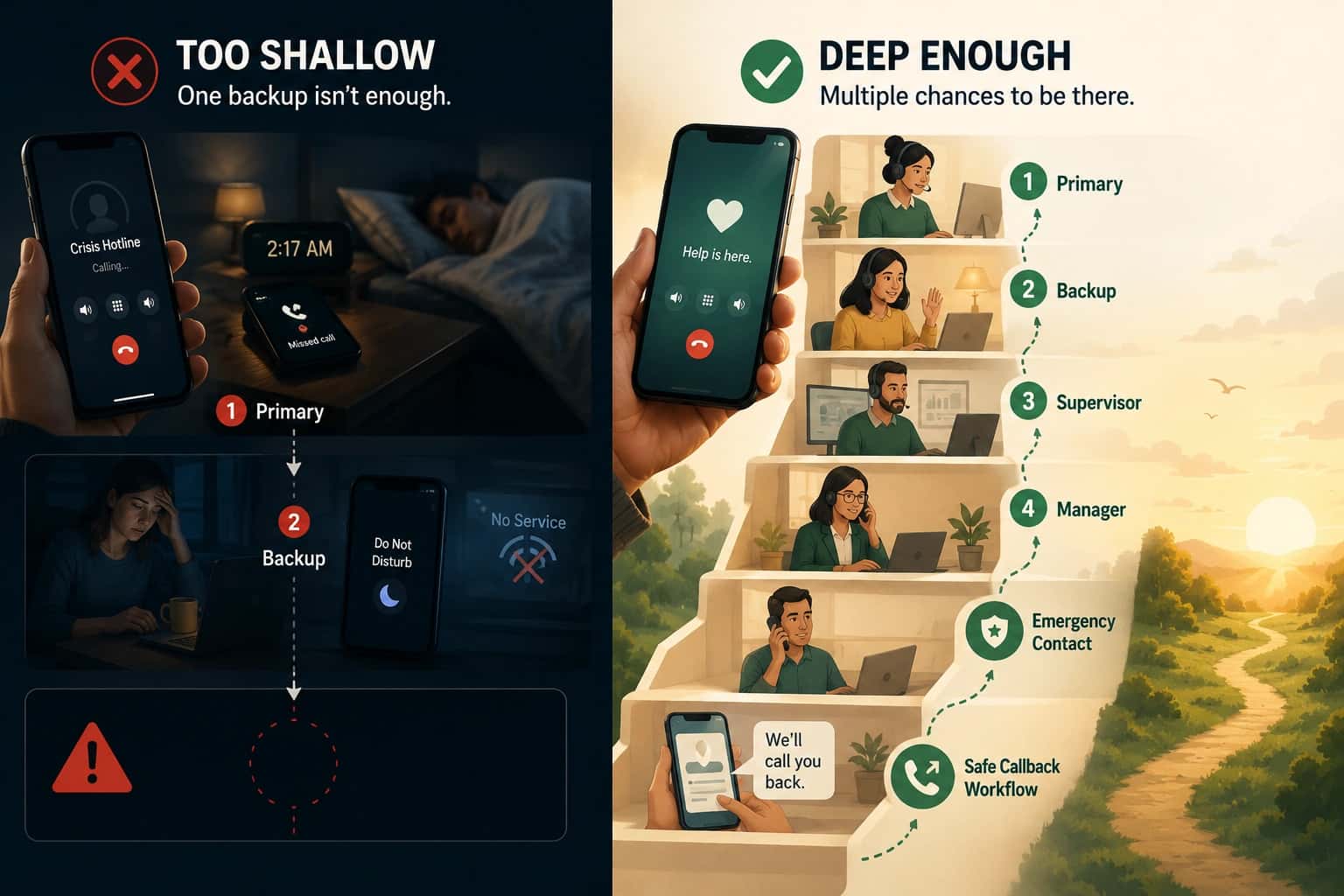
Staff should be able to set "do not disturb" windows where calls do not reach their device. This requires explicit escalation paths so calls still get answered, just by someone else.
What it protects: Prevents burnout from constant availability.
What to require: Per-staff DND settings. Escalation paths that route around unavailable staff. Visibility into who is actually available.
Escalation rules for safety situations
Some calls require immediate supervisor involvement. Threats, repeated abuse, and complex situations should be escalatable without the staff member having to handle it alone.
What it protects: Reduces individual burden. Provides support for difficult situations.
What to require: One-click escalation to supervisor. Call recording or documentation for escalated calls. Follow-up process for flagged situations.
Requirements to write down
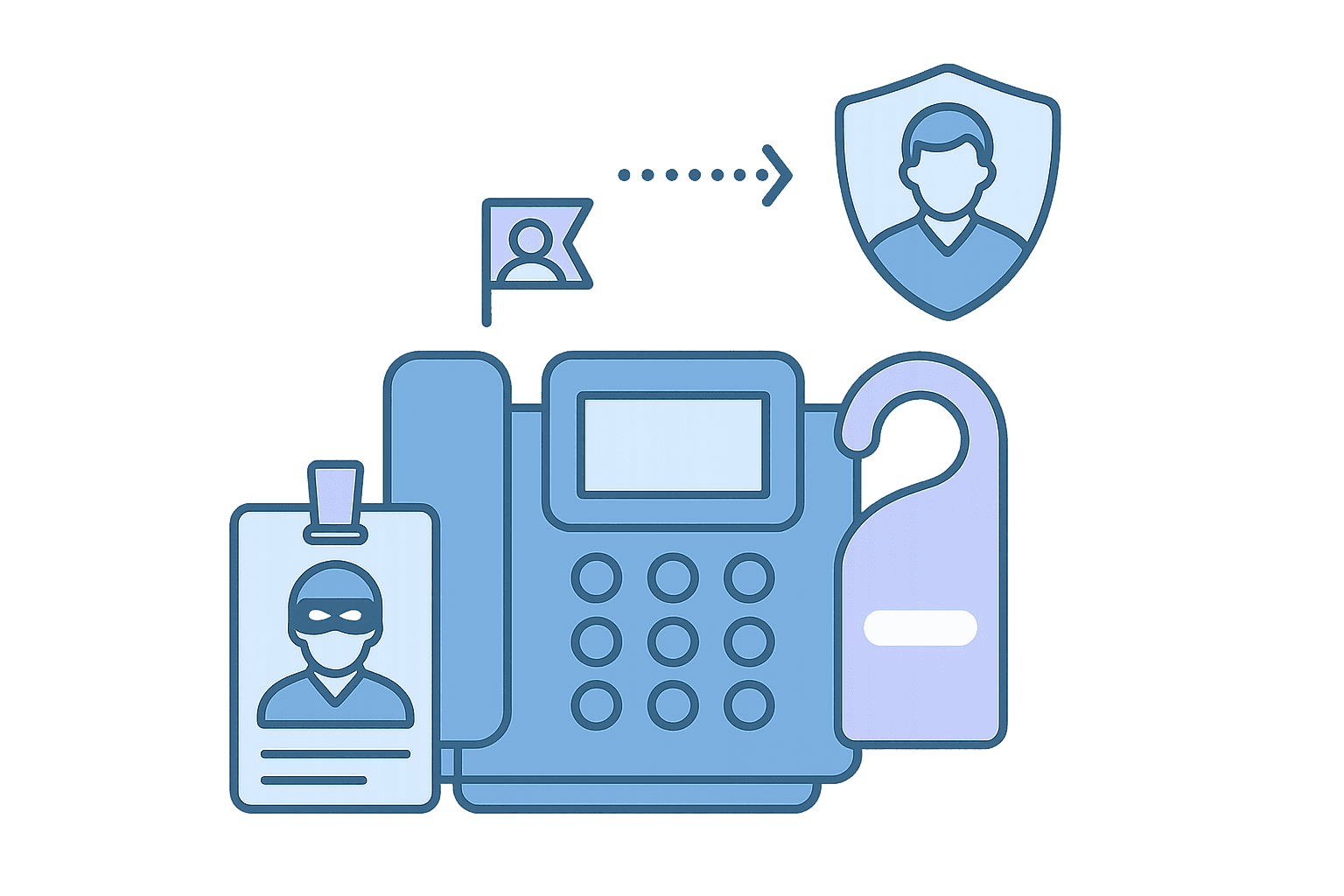
| Requirement | Risk reduced | How to test it |
|---|---|---|
| Number masking for all outbound | Personal number exposure | Call your own number from the system. What do you see? |
| Flagged caller visibility | Repeat harassment without warning | Flag a test caller. Does the flag appear on the next call to a different staff member? |
| DND settings per staff | Burnout from constant availability | Set DND and test whether calls still route to you |
| Escalation path for flagged calls | Staff handling difficult situations alone | Flag a caller and call. Does the call route differently? |
| Callback through system, not personal | Callback identity leakage | Return a call using the system. What number does the caller see? |
Getting started
How to audit your routing for safety boundaries
- Test number masking: Call your hotline from a test number. What caller ID do you see when staff answer? What happens on callback?
- Review flagged caller process: How do staff flag problematic callers? Is the flag visible to others?
- Check DND settings: Can staff set do-not-disturb windows? Does routing respect them?
- Test escalation: Can staff escalate a call to a supervisor during the call? What happens to flagged callers?
- Document the gaps: Where are staff exposed? What boundaries are missing?
Want us to follow up?
The full framework for evaluating routing as a safety-aware system is in call routing solutions.
If unwanted callers are already hurting the team, the inappropriate caller protection guide has specific strategies.