
Running a 24/7 hotline at a nonprofit is tough. As a hotline leader, you tackle phone and scheduling problems daily. Which issues should you fix for lasting impact, and how? Plus, how can you sustainably launch your chat and text program?
We’ve put together a mini how-to guide to solve some common and high-impact problems, along with a rubric you can use to select a vendor to avoid many of the common problems we’ve seen. We hope that it’ll help you support your community more quickly and sustainably.
If your agency is experiencing challenges one of these challenges then we hope the provided tips here will help you solve it in a sustainable way.
Each hotline is unique in significant ways, and this article isn’t meant to be comprehensive. What we’ve seen work may or may not apply to your agency. If you’re looking for a quick solution check out our call forwarding service.
Helpline Software for Hotline Systems
We've worked with crisis coordinators, hotline coordinators, volunteer coordinators, and executive directors around the country to solve their unique challenges and we presented on some of these nationally. The author has personally worked with leaders to design over a two dozen phone, chat, or text hotlines.
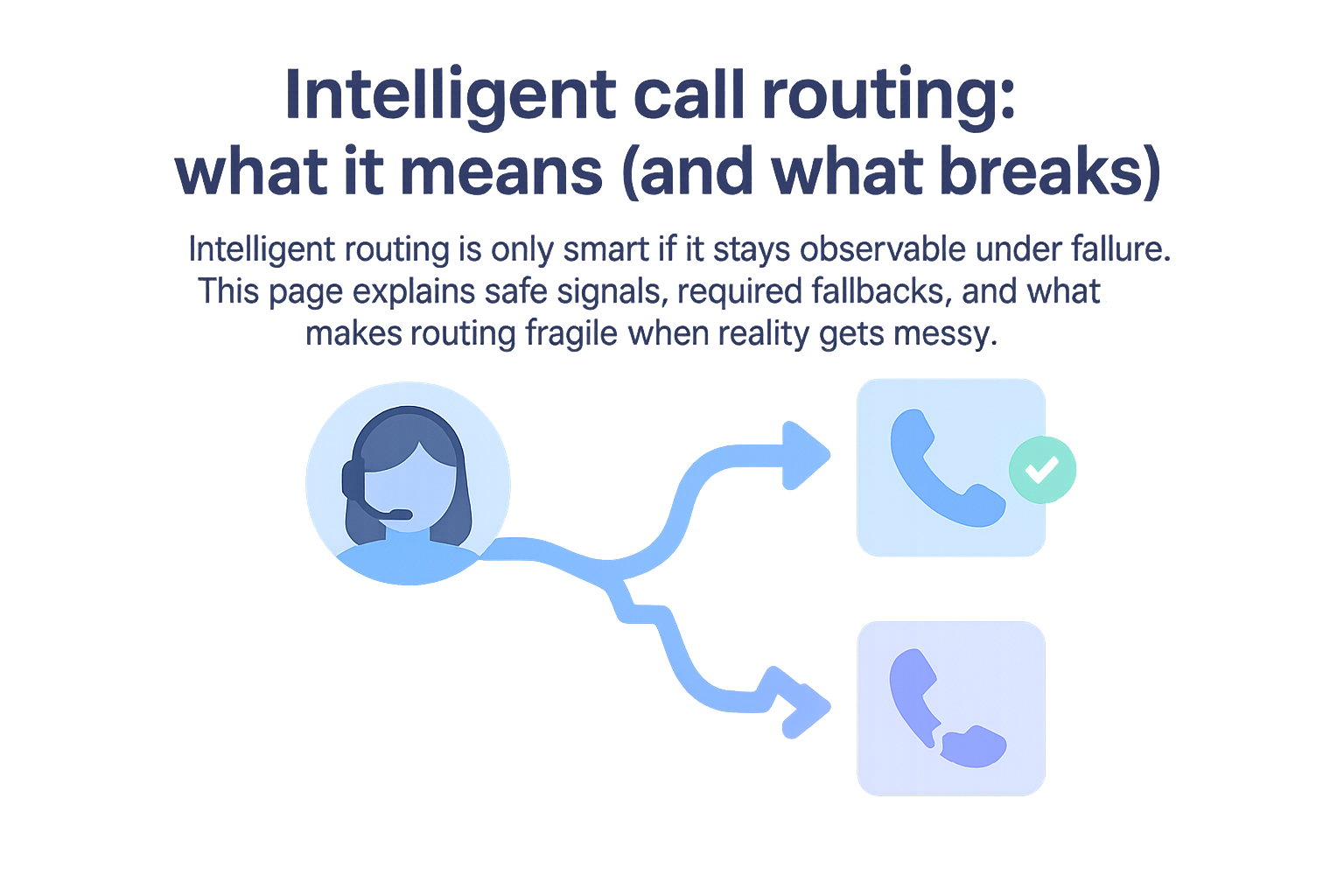
For the complete framework on evaluating routing reliability—including fallbacks, overflow behavior, and audit trails—see call routing solutions.
Overview
- Solving Problems with 3rd Party Hotline Answering Service Operators
- Making, Updating, and Coordinating the Shift Schedule is Very Complex
- Chat & Text Can Be Tricky (see also: learnings from launching a text and chat helpline)
If you're just getting started, check out our guide on how to start a crisis call center.
Common Hotline Challenges & Solutions
 Let’s say that there’s a crisis center that uses an answering service (or automated system) to forward hotline calls to on-call advocates, and they’re experiencing some common problems.
Here are a few of those issues, presented via anonymized quotes from your counterparts at other agencies:
- Operators Go Off-Script: “We currently have an answering service and a lot of times the operators will kind of go off and do their own thing. They’ve very inappropriate with our callers …“
- Long Hold Times: “… we ended up having multiple times where survivors were reaching out and not getting service for two hours”
- Not Following Call Forwarding Instructions: “If a volunteer or staff person did everything in their power to change the time that they were able to pick up and still got a call when they tried so hard not to then it inevitably creates a lot of tension … and that tension is directed toward the people that manage the schedule.”
- Multiple Calls At the Same Time: “…sometimes I get forwarded a call when I’m already on a call with a survivor … it’s very disorienting and stressful…” [paraphrased] Do you relate to any of these issues? If you’re thinking we don’t have any problems, then I’d encourage you to read on, and try the Hotline Audit below. We had someone audit their hotline and then call us panicked because of what they discovered.
How to Audit Your Hotline for System Issues
You can use this quick audit to see what kind of challenges your callers experience. Some of these questions only apply if you have a 3rd party answering service. You should of course do not do this without securing any necessary approvals.
Step 1: Call your 24 hour hotline at a time when your 3rd party answering service is going to be taking calls, and request service. Keep track of these things:
-
Are you connected with somebody the correct on-call person at your agency?
-
How long were you on hold? How long do your callers typically wait?
-
If you utilize a 3rd party answering service, then make note of what the operator said? Did they discourage you from requesting service for unexpected reasons, or say something inappropriate?
-
Were there any quality issues? Was the call dropped? Is the call quality very bad? Is it the same as a cellphone call?
-
If you utilize a 3rd party answering service then make note of what questions the operator asked. Did they breach your confidentiality policy by requesting information they’ve been explicitly instructed not to request?
-
What happens if multiple people call at the same time? Is it really rolling over like you expect or something else?
-
Was the call directed to someone that had marked themselves as unavailable for a short period of time?
Step 2: Repeat Step 1 three times, on different days, and at different times.
Step 3: Analyze the results. Are they acceptable for your agency?
Solving 3rd Party Hotline Answering Service Issues
The tag line here should be “Don’t Repair – Beware”.
We’ve spoken to a lot of agencies that have these issues, and they all tell us that they’ve reached out to their vendor’s support to solve these problems but that they still have the problem, because the vendor was unable to address it in a long-term way. For that reason we’d recommend switching vendors and somehow eliminating the 3rd party operator if you have one.
What should you do if your budget is tight? If you need an affordable solution that tackles these issues, check out an automated system that operates reliably according to your on-call schedules. This can be challenging, so we’ve outlined a guide to help your agency choose the best option.
Choosing the Right Hotline System: 4 Key Criteria
If your calls should be routed according to a specific order then you should be able input your current on-call order into the system, and have it reliably call agents in that order.
Criteria 1: Systems That Support Your On-Call Order
One key thing to watch out for is a system where the only practical option is to ring all the people that are on-call for a given group (e.g., logged-in to the app). We’ve seen agencies take on systems like this, and simply instruct the on-call primary to answer after the first ring, the on-call backup to answer after the 3rd ring, or something like that. Sounds like a good plan, right?
Unfortunately, this doesn’t work.
What agencies see in practice is that everyone’s phone rings for a different amount of times (depending on unpredictable factors), and that they have constant challenges implementing any kind of order to who answers the call first, who answers second etc.
Criteria 2: Hotline Systems with Robust Scheduling
Save Time with Pre-Scheduling Custom Shifts What do you do if someone can only cover part of their shift because of planned time off? Can you easily update the schedule, or do you have to track it elsewhere and remember to change it later? This can be especially tricky for overnight shifts. If it happens often, consider a vendor switch or new policies, but be cautious—too strict rules might cause more issues.
Your existing shift schedule probably incorporates some hard-won lessons about which shifts are harder to fill, your call patterns, etc. in a way that minimizes burnout for your agency. It could be a major step back for your agency if you choose a vendor that doesn’t allow you to implement any of those lessons your agency has learned over so many years of service.
A built in shift-request approval process can save you a lot of time. If on-call individuals go through a shift-request approval process then it’s helpful to have it built in so you don’t have so many disconnected systems that you have to input any change. We’ve seen agencies save nearly half a full time employee from automating this workflow alone.
For more information check out our article on how to choose an answering service.
Criteria 3: Hotline Software with Multi-Layered Call Forwarding for Backup Support
Systems that support scheduling typically support two forwarding numbers- first to an on-call primary and if they don’t answer to an on-call backup.
This can be problematic, if you’re trying to make sure no calls get missed. If the on-call primary forgot about their shift, and the on-call backup is already on a call you’re not going to be able to talk to any additional callers. What if both the primary and backup forgot their shift, or are both out of reception — what happens then?
Not having our system can lead to burnout. Can your agency handle spreading calls to only two people when it’s the busiest time of day? Was your backup plan meant to cut down on burnout for volunteers and staff? Could it cause burnout in other ways? If you have more than 2 calls at once, what happens if one person can’t answer quickly?
Two layers of backup might not be enough. Sometimes the on-call primary’s phone isn’t working well and rings too briefly. This makes them hard to reach overnight, leaving your agency able to support only one caller at a time. Even with everyone doing their part, one person might still handle all overnight calls.
Criteria 4: Modern Chat & Text System Capabilities
Lots of agencies want to start a Chat & Text program, but don’t know how, don’t have the capacity, or can’t find a system that balances privacy with ease of use.
Make sure chat includes delivery receipts. You may find that people regularly open and close the chat window, or open it in multiple tabs in an effort to reach someone sooner. This means your staff have to spend a long time chatting with a chatter that has closed their tab just to make sure they are not just unsure of what to say.
How you get notified about new chats & texts can be key to reducing burnout and not missing conversations. Will your on-call get an email notification (can be problematic)? Do they have to be in front of the computer 24/7 and wait for the chat window to pop up with the notification sound? How reliable are these approaches, and what are they doing for burnout?
If your agency expects a very low volume of chats at night you may prefer to allow the on-call person to sleep, but wake up them up with an automatic call notification, and then wake up the supervisor if the chat isn’t responded to in a timely way. Your system should be able to do all of these things.
Finally, make sure that chat & text supports your privacy policies.
Our All-in-One Hotline Solution
Our agency provides comprehensive customized phone, chat, text, scheduling and reporting systems for hotlines around the country. It addresses all of the issues above in one package and a lot more. If you have questions please feel free to check out our FAQ page and contact sales.
You can learn more on our website helplinesoftware.com You can also reach the author directly at spal [at] helplinesoftware (dot com). We’re very thankful to Twilio for posting a previous version of this article on their blog! CONTACT OUR TEAM